DOOH, or digital out-of-home, is outdoor advertising shown on digital screens, usually LED videotrons, where the creative is uploaded and scheduled through a content system instead of being printed and installed by a crew. Conventional OOH is the printed version: one artwork on one face for the length of the booking. That sounds like a production detail, but in practice it changes how you brief the creative team, how many versions you produce, how the schedule is built, and what you get in the post-campaign report.
If you are planning Indonesian media from abroad, or splitting a Q4 budget between print billboards and screens in Greater Jakarta, this is how the two formats actually behave on the ground, using sites we operate in Jakarta, Bandung, Bogor and Bekasi as reference points.
How DOOH advertising works on a Jakarta screen
On a DOOH screen your ad does not stay on air continuously. Several advertisers share the screen in a rotating loop, and what you buy is a slot: a spot length measured in seconds, a number of plays per loop, and the screen's operating hours. Two campaigns on the same screen can therefore carry very different weight depending on how many slots each one books.
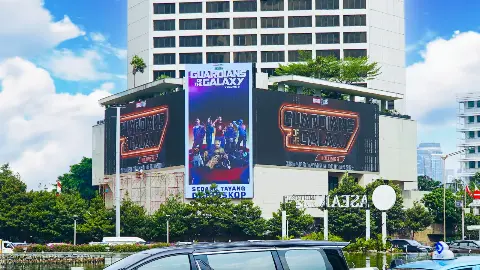
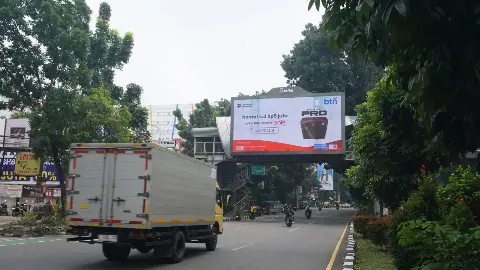
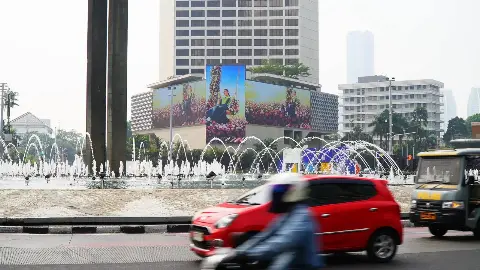
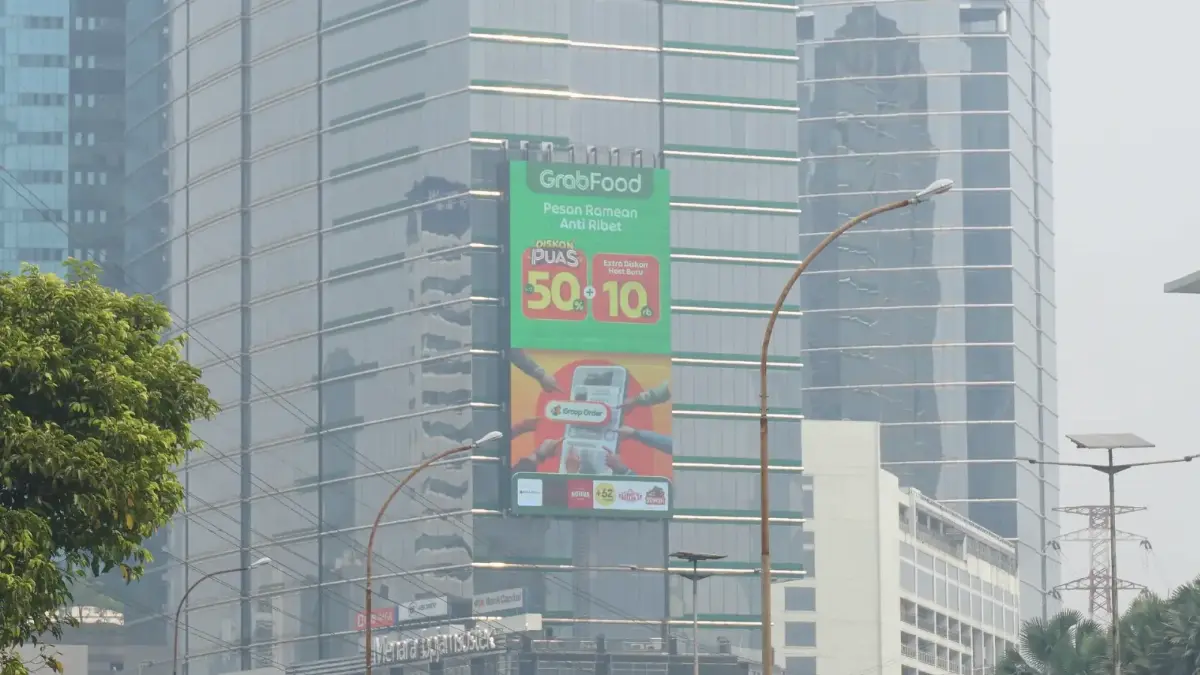
Aspect ratios are the first practical surprise for international teams. LED Jamsostek on Jl. Gatot Subroto is a 15 m x 30 m portrait screen, so a 16:9 cut from your global TVC will not fit without a dedicated edit. LED Slipi on Jl. Letjen S. Parman is 9 m x 18 m and faces traffic heading towards Semanggi. LED Mandarin, in front of the Mandarin Oriental at Bundaran HI, is a three-sided robotic LED (27 x 9 m, 8 x 16 m and 27 x 9 m) with moving panels, and it is Indonesia's first robotic LED.
Once a file passes technical and content checks, our operations team loads it into the screen schedule. Swapping creative mid-flight goes through the same route, with no one climbing a structure.
How it differs from conventional billboards
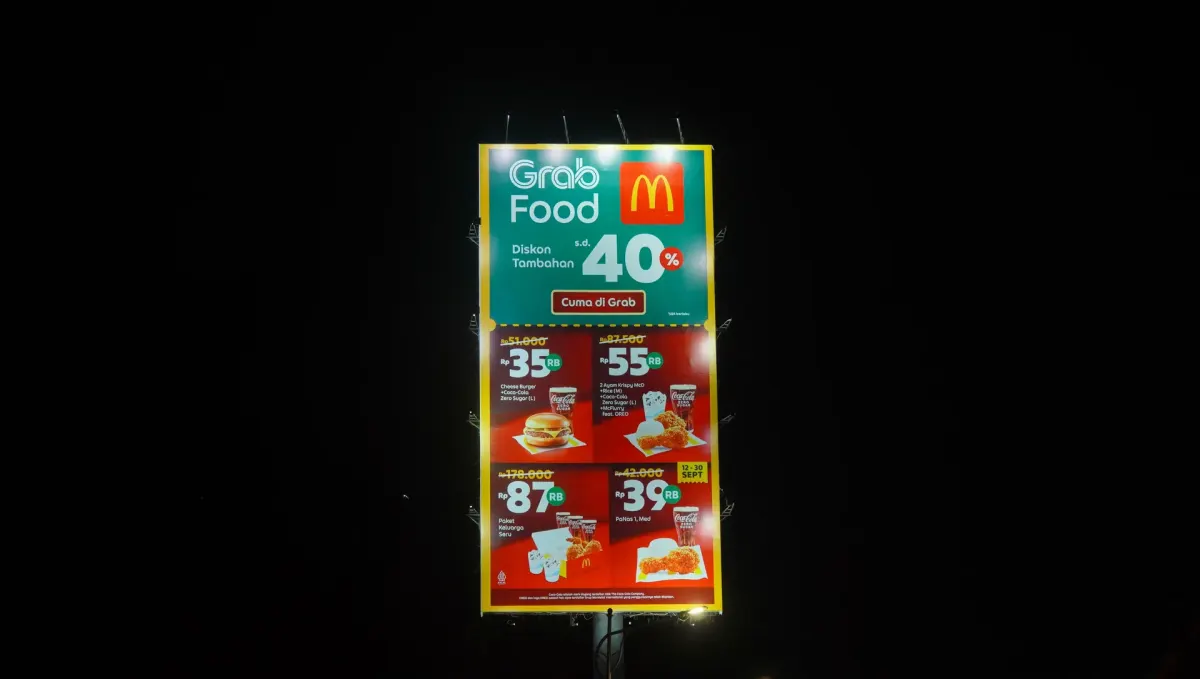
A static billboard runs on simpler logic. You rent one face for a set period, the artwork is printed on flexi or vinyl and installed, and for that period the face belongs to your brand alone. Billboard TB Simatupang in Cilandak, for example, is 8 x 16 m and faces traffic heading to Lebak Bulus; every commuter on that stretch sees the same message all day, and floodlights carry it through the night.
| Factor | DOOH / LED videotron | Printed billboard |
|---|---|---|
| Share of the face | Shared loop, bought by slot | Exclusive for the booking period |
| Creative format | Video or stills, several versions possible | One printed design per period |
| Changing creative | Rescheduled in the system | Reprint and reinstall |
| Time targeting | By hour or by day | Same message around the clock |
| Proof of posting | Field photos plus schedule report | Installation photos plus periodic checks |
Neither format wins by default. A billboard gives you full presence on one route; a screen gives you flexibility and motion, at the cost of sharing attention with the other advertisers in the loop.
When a screen is the better buy
DOOH earns its place when the message moves. Weekly promos, a launch countdown, or different creative for the morning and evening commute are awkward on print because every change means a new print run and a crew visit. Late October is a good example: retail and e-commerce brands in Indonesia typically need a teaser before 11.11, a main 12.12 execution and then Christmas and New Year creative. On LED, that sequence is a scheduling job.
Screens also make multi-corridor coverage straightforward. Permata's campaign ran across several of our Jakarta screens, namely LED Jamsostek, LED Dukuh Atas, LED Mega Anggrek B, LED Satrio and LED Slipi, which covers Gatot Subroto, Sudirman and the S. Parman corridor with one digital creative package.
Motion is the third reason. A short loop with one clear movement, such as a product turning or a number changing, catches a driver's eye faster than a still image. The robotic LED at Bundaran HI adds a further layer because the screen panels themselves move.
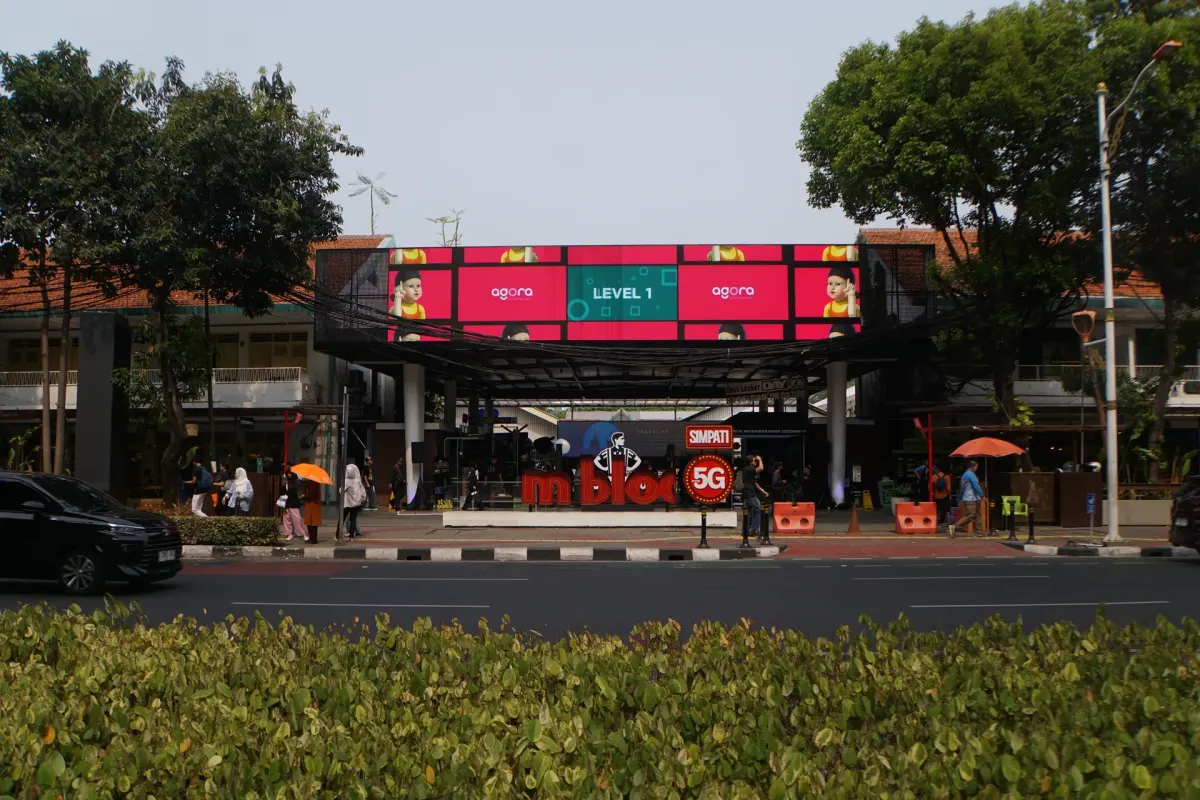
Not every DOOH screen sits on a highway, either. Facade and venue screens at lifestyle destinations, such as the LEDs at M Bloc on Jl. Panglima Polim in South Jakarta and the screens inside Agora Mall, reach people on foot who have more time to look. Creative for those placements can carry more detail than a cut built for drivers on an elevated road.
When print still makes more sense
If the goal is constant presence on a single commuter route over several months, for a property launch, a store opening or regional brand building, a static billboard is often the more efficient choice. You are not sharing the face, and people on the same daily route see the same message again and again.
Production is simpler too: one strong design, no animated versions. Sites such as Billboard PGC on Jl. Dewi Sartika (8 x 16 m, facing towards Jl. Raya Bogor, Cililitan) or Billboard Kota Kasablanka on Jl. Dr. Saharjo (facing Kuningan) suit messages that do not need to change during the flight. Many of the plans we build use both: billboards as anchors on the main corridors and screens to amplify launch days or promo windows.
Proof of play and what the report can tell you
For print, proof means installation photos on day one and periodic checks for torn vinyl, failed lighting or new obstructions. For DOOH, proof means field photos taken while your creative is on screen, plus a schedule summary from the system. The photos matter because they show real conditions: whether the screen reads clearly from the traffic side, whether the creative is cropped, and whether colours hold up under midday sun. Ask to see a sample report format before the campaign starts.
Keep the scope of that report in mind. It confirms that the ad ran as scheduled; it does not tell you how many people saw it or bought something. To measure impact, pair the placement with something trackable, such as a dedicated promo code, a QR code or a lift in branded search in the campaign area.
Loop, slot and programmatic DOOH in plain terms
A loop is one full rotation of all creatives on a screen. A slot is your allocation within it, and share of time is your portion of the loop. Together they decide how often your ad faces passing traffic. Programmatic DOOH refers to automated slot buying through a platform, often triggered by time, weather or audience rules. It is growing in some markets, but most videotron campaigns in Indonesia are still planned and bought directly by site and by period. If you want simple time-based triggers, such as breakfast creative in the morning and dinner creative in the afternoon, ask us whether your chosen sites support hourly scheduling; on many screens it can be done with standard scheduling.
What drives the cost of each format
We do not publish rates because they depend on a mix of variables. For DOOH: location and facing, screen size, spot length, plays per hour, operating hours and campaign length. For print: location, face size, rental period, printing and installation, and local advertising tax. Permits and advertising tax are handled through official channels for every site, so bring our team in early to keep the schedule intact. Our breakdown of what drives videotron advertising cost in Jakarta goes deeper, and our guide to slot length and frequency covers how much airtime is enough.
Next step
Start with one question: will your message change during the campaign? If yes, begin with our DOOH LED videotron service. If the message is fixed and you want full ownership of one route, look at static billboards in Jakarta. Send your target areas, flight dates and existing creative formats via WhatsApp at +6282288108888 and we will come back with a site recommendation and a quote.