Programmatic DOOH in Indonesia means buying slots on outdoor LED screens through software, using rules you set such as time of day, weather or audience profile, instead of signing a contract for a named site over a fixed period. For a brand or agency planning a Jakarta campaign, the useful question is not whether programmatic is more advanced. It is which part of the plan genuinely needs that flexibility, and which part is safer locked in with a direct booking on a specific screen.
The local market is still developing here. Not every screen is connected to an automated buying platform, and many landmark screens are sold directly by their owners. In practice, a workable plan usually combines both approaches.
Programmatic DOOH vs direct booking
With a direct booking, you choose the site, for example LED Senopati, an 8 x 4 m screen facing SCBD, and agree on the period, spot length and number of plays per day. The schedule is fixed and you know exactly which screen will carry your creative.
With programmatic, the unit you buy is usually plays or estimated impressions. A demand-side platform (DSP) sends requests to the media owner's supply-side platform (SSP), and the system plays your creative on qualifying screens when your conditions are met. You gain speed in shifting budget. You give up some certainty about where and when you appear.
| Aspect | Direct booking | Programmatic DOOH |
|---|---|---|
| What you buy | Site, period, spot length, frequency | Plays or estimated impressions |
| Screen certainty | Named in the contract | Depends on connected screens and your targeting rules |
| Mid-flight changes | Coordinated with the media owner | Adjusted from a dashboard, within agreed limits |
| Best suited to | Launches, landmarks, share of voice on a chosen corridor | Tactical messages, time-based offers, creative testing |
How a programmatic buy reaches a roadside screen
International teams sometimes expect the process to be fully automated end to end. On outdoor screens in Indonesia, several steps still involve people, and they belong in your timeline from day one.
- The media team defines the rules: cities, screen types, hours, triggers and budget caps.
- Those rules go into the DSP, which matches them against screen inventory available through the SSP.
- Creative is submitted for approval. The media owner still checks content against local advertising regulations and the Indonesian advertising code of ethics (Etika Pariwara Indonesia) before it can run.
- The screen's content management system plays the creative when conditions are met.
- Play data flows back to the platform as a report, ideally supported by field photos.
Step three is where schedules slip. If new creative arrives the day before launch, programmatic flexibility will not save you. Prepare several versions together and submit them as one batch.
Triggers that make sense on outdoor screens
Not every data feed is a good trigger. A driver passing a roadside screen has a few seconds, so a change in creative has to mean something to the person on the road at that moment.
Time of day and day of week
This is the simplest trigger and usually the most useful. A coffee brand can run a morning version along an office corridor and switch to an afternoon version for the evening commute. The same dayparting can also be scheduled in a direct booking, agreed with the media owner upfront, with no programmatic platform involved.
Countdowns to an offer
November and December are peak shopping-campaign months in Indonesia, running from 11.11 to 12.12 and on to New Year. Creative that changes daily ("3 days left") is far easier to run when every version and the rotation schedule are approved before the flight starts. That works through programmatic or through a manual schedule.
Weather and live moments
Cold drinks on a hot afternoon or umbrellas in the rain sound appealing on a planning slide. Confirm first that the screens you want are actually linked to a weather feed and can switch quickly enough. For match days or announcements, having approved creative ready matters far more than the technology.
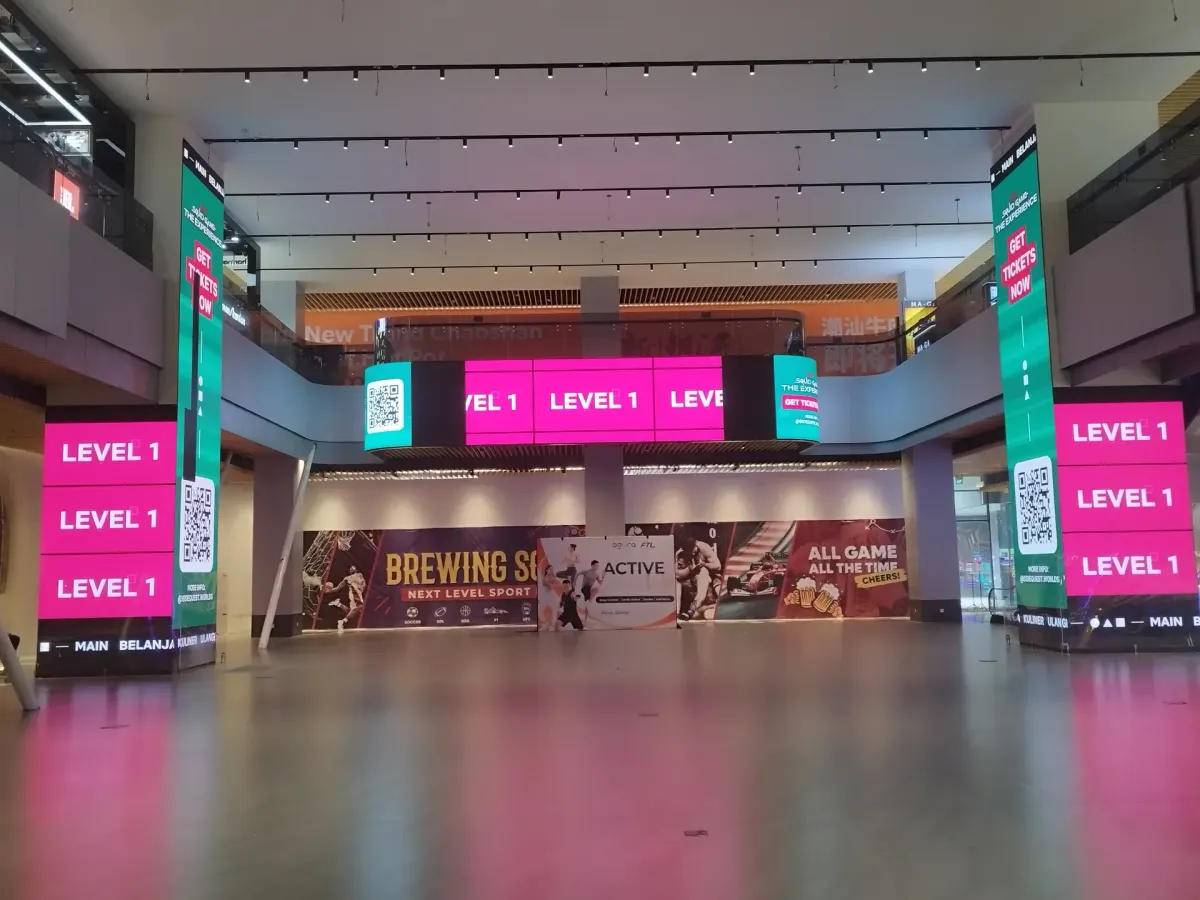
Indoor screens offer a different pattern. At Agora Mall in Tanah Abang, the LED Pilar L2 and Sunken Garden L1 screens measure 14.72 m x 2.08 m and sit in the path of shoppers. In a venue like this, splitting creative between lunch hours and weekends tends to be more useful than any weather trigger.
When a direct booking is the better buy
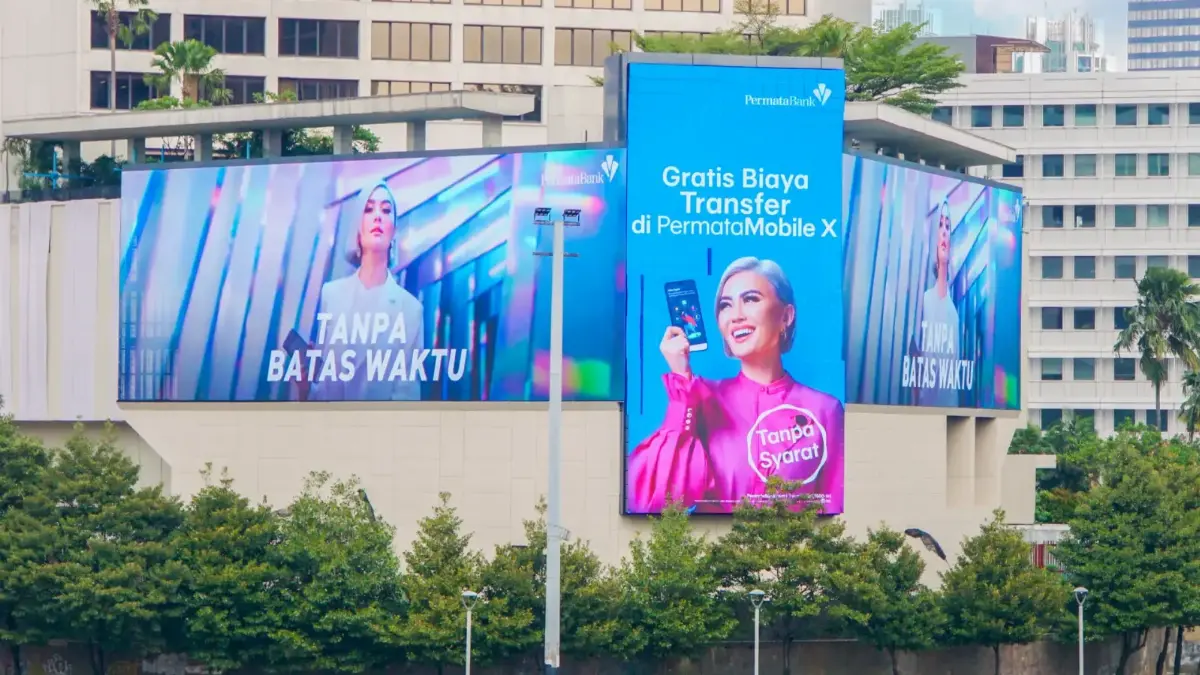
Some campaigns lose their point if they are bought as scattered impressions. A launch built around one recognisable location is the clearest example. LED Mandarin at Bundaran HI is Indonesia's first robotic LED, with three sides measuring 27 x 9 m, 8 x 16 m and 27 x 9 m. Its three faces and movement have to be planned together with the creative. A Permata Bank campaign has run on this screen as digital OOH, and buys like this make most sense as a direct booking for a set period. We cover side selection and scheduling in our piece on LED videotron advertising at Bundaran HI.
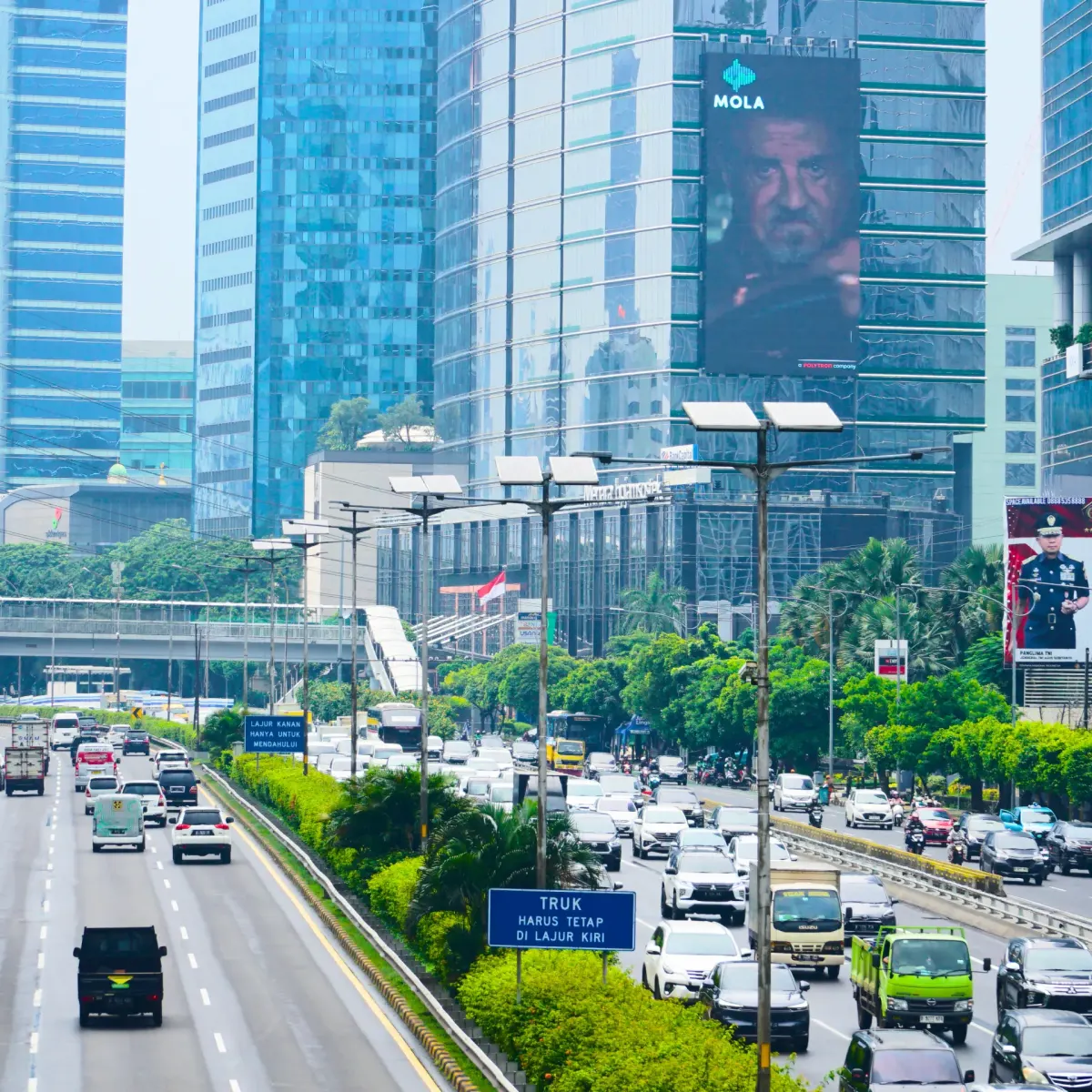
The same reasoning applies to large screens on business corridors, such as LED Jamsostek on Jl. Gatot Subroto, which measures 15 m x 30 m and has carried a Mola TV campaign. If the goal is consistent share of voice on one corridor for the whole flight, a direct contract gives certainty that an impression-based buy cannot always promise.
Direct booking is also the safer route when you need site-level proof of play that is easy to audit, or when your creative is designed for one specific screen size.
Questions to put to the media owner first
Before committing budget to a platform, get written answers to the following. They decide whether your end-of-campaign report will hold up with a client or a regional office.
- Which screens are actually connected, and can you see the site list before the flight starts?
- How impressions are calculated, from which data source, and whether figures are estimates or measured.
- The maximum share of time you can buy on a single screen, so your creative does not appear too rarely to register.
- Creative specifications per screen size. The 4 x 8 m screens on Buah Batu, Jalan Riau and Jalan Sunda in Bandung need a different layout from the 15 m x 30 m screen on Gatot Subroto.
- Reporting format: logs per screen, field photos, and notes on any downtime.
If any answer is vague, shrink the programmatic share and move that budget to sites with a fixed schedule.
Testing programmatic on a small scale
If your team has never bought outdoor screens through a platform in Indonesia, do not move the whole budget at once. Carve out a small share of the DOOH spend, pick one city, and set one question to answer, for example whether an afternoon creative drives more branded search in that city than a single all-day version.
Run the test alongside directly booked sites and compare both reports. Check three things: whether the screen list matched what was promised, whether budget delivered on schedule, and whether proof of play was detailed enough to audit. If all three pass, increase the programmatic share next time. If not, you have lost a small test budget rather than a campaign. Agree on the measurement baseline before the test starts, not after.
What shapes the cost
For direct bookings, cost depends on location and screen facing, size, period, spot length, daily frequency, plus creative production and local advertising tax. We break these down in our article on videotron advertising cost in Jakarta.
Programmatic adds its own layers: CPM-based pricing, platform and data fees, the targeting layers you switch on, and sometimes a minimum spend. The tighter your rules, the fewer screens and hours qualify, so budget may deliver more slowly than planned. We do not publish figures because every combination differs. Send a short brief and our team will price it against your sites and dates.
Next steps for an early-2027 flight
If you are planning the first quarter, start with a two-layer structure. Layer one is one or two anchor sites bought directly for the full period, such as the screens at Bundaran HI or on Gatot Subroto. Layer two is a flexible budget for tactical messages that change with the hour or the offer, run through an agreed creative schedule or through programmatic where the screens support it.
Come to the conversation with three things: the campaign goal in one sentence, the cities and corridors that matter to you, and how many creative versions your studio can realistically produce. With that, our team can tell you which sites suit which buying method. Browse the screens on our DOOH LED videotron page, then message us on WhatsApp at +6282288108888 for site recommendations and a quote.