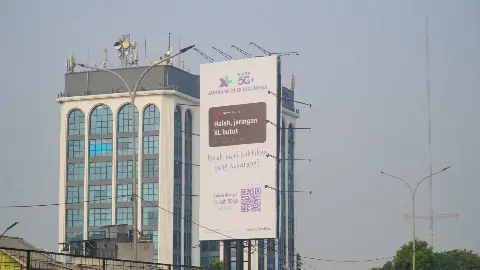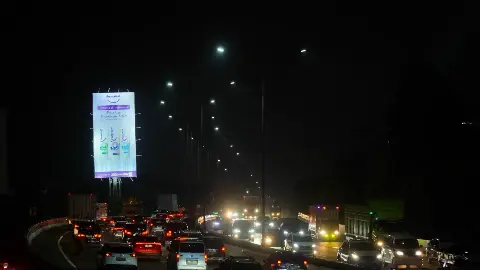
Most static billboard vs digital billboard decisions in Jakarta come down to three questions. How long will your message stay the same? Do you need a site to yourself? How often will the artwork change during the flight? If the message holds for months and you want one large face carrying only your brand, a static billboard is the stronger choice. If the message changes weekly, carries promo dates, or should look different in the morning and at night, an LED videotron fits better. Everything after that is route, facing direction and how the budget is split.
This is how we weigh the two formats when we build site recommendations for brands and agencies, using sites we operate in Jakarta as reference points.
How static billboards and digital billboards actually behave on the road
A static billboard is a printed face mounted on a structure. For the whole contract, that face carries only your artwork, day and night. Billboard Lebak Bulus on Jl. RA Kartini in South Jakarta is a good example: 8 x 16 m, one side, facing traffic heading from Fatmawati toward Lebak Bulus. Drivers on that stretch see the same image every day, so the message builds through repetition.
A videotron runs on a loop. Several advertisers rotate on the same screen and you buy a slot of a set length that appears many times per day. LED Slipi on Jl. Letjen S. Parman measures 9 x 18 m and faces toward Semanggi. The canvas is large, but you share airtime unless you buy an exclusive slot or a longer share of the loop. We cover slot logic in more detail in our piece on videotron slot length and frequency.
The trade-off is straightforward. Static gives you full ownership of one site. Digital gives you flexibility in message and schedule, with presence shared over time.
When a static billboard is the better buy
Static works best for messages without an expiry date: brand identity, a hero product, positioning, or an evergreen call to action such as an app name and its main benefit. Because the artwork never changes, one strong visual with very little copy reaches the same commuters every morning and evening. For FMCG, banking or property brands that want to look consistent along one corridor, that steady presence is hard to replicate with a shared slot.
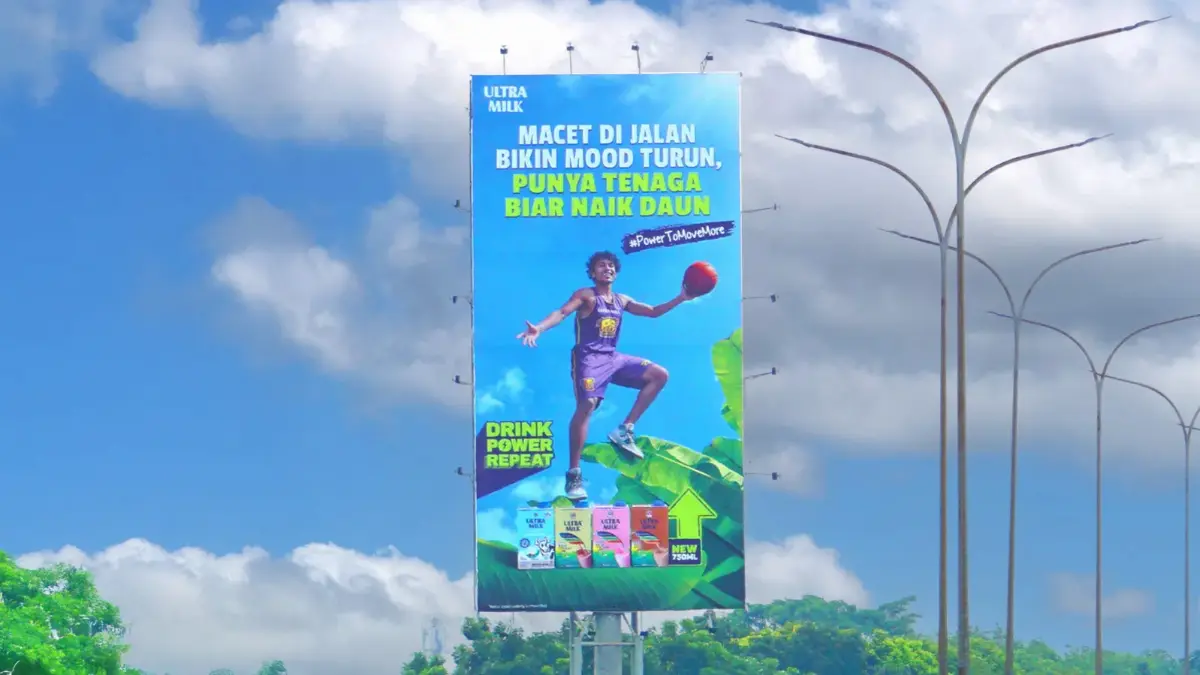
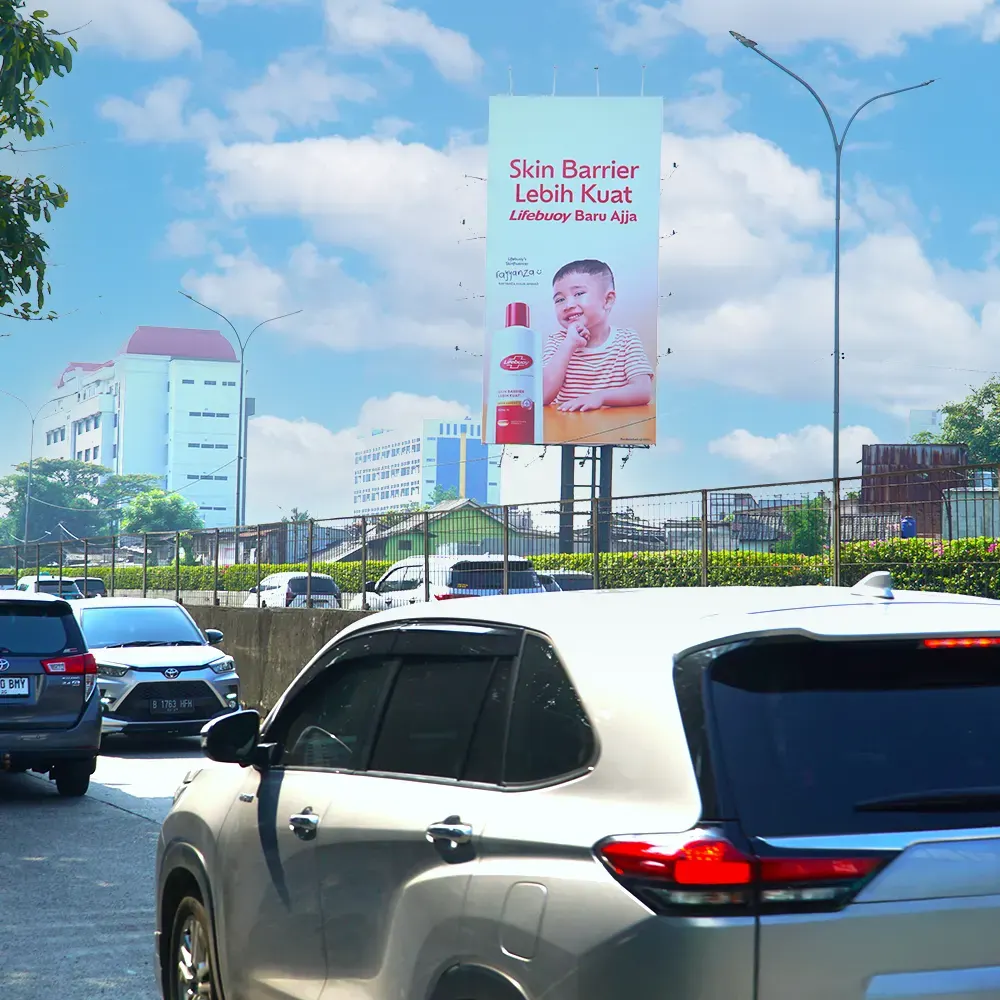
Two examples from our own inventory: an Ultra Milk campaign ran on Billboard Lebak Bulus, and a Lifebuoy campaign went up on Billboard Arjuna B on Jl. Arjuna Selatan in West Jakarta, a 6 x 12 m face. Both used a single large visual and a short headline, which is what a glance from a moving car allows.
Static also makes sense when you need site exclusivity. On corridors where competitors advertise heavily, holding a full face for several months means nothing else appears on that face before or after you. On a videotron, the loop can include adjacent categories unless you agree category separation with the media owner at booking.
The weakness is changing creative. Every new visual means a reprint and a reinstall, with production time and extra cost. That makes static a poor fit for offers that change week to week.
When a videotron earns its place
Digital wins when the message moves fast. Dated promotions, launches with a teaser and a reveal phase, and campaigns that want different creative at different hours are all easier on an LED screen, because swapping artwork needs no physical production. You can also use motion, such as a short animation that pulls a driver's eye to the screen.
Night-time visibility is the other factor. A static face relies on floodlights, while an LED screen emits its own light, so bright high-contrast creative stands out on darker streets. LED Senopati in South Jakarta, an 8 x 4 m screen facing toward SCBD, is a screen that arguably does its best work after sunset, when the corridor fills with evening traffic heading to the area's restaurants.
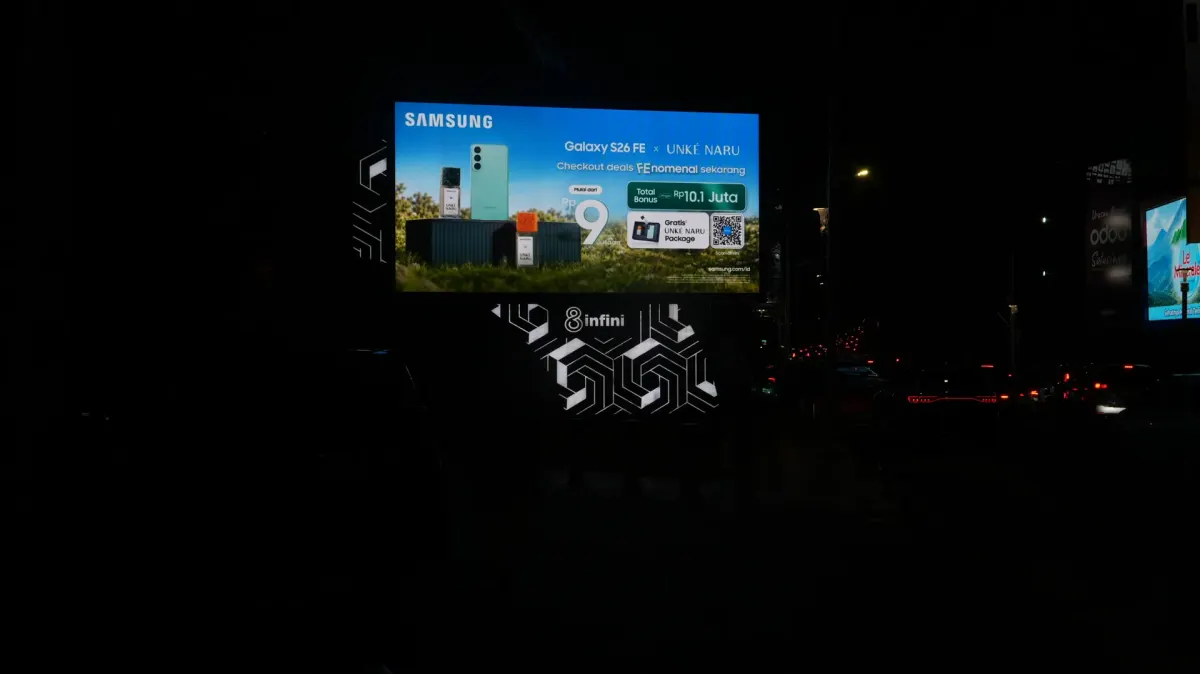
Digital also suits shorter flights. For a one-week event or a specific shopping moment, buying slots for a short period is usually more sensible than printing and installing a static face that comes down a few days later.
A quick comparison for your campaign brief
We use this table to open the conversation with clients before we get into individual sites.
| Question | Static billboard | Digital billboard (videotron) |
|---|---|---|
| Presence at the site | Full, one brand for the contract | Shared airtime in a loop, unless exclusive |
| Changing creative | Reprint and reinstall | Send a new file to the screen's specs |
| Message type | Brand, hero product, long-running message | Dated offers, teasers, dayparted messages |
| Night-time | Depends on floodlights | Screen emits its own light |
| Typical flight | Months | Flexible, weeks to months |
| Creative format | Still image, minimal copy | Short video or animation, multiple versions possible |
If most of your brief lands in the left column, start with static. If it lands on the right, start with digital. If it splits evenly, a combination usually beats forcing one format to do both jobs.
Running both formats in one plan
Plenty of brands do not choose. A pattern we often build uses static faces as anchors on the main commuter corridors and videotrons for tactical messages in business districts and the city centre. Grab, for example, has run campaigns on Billboard PGC and Billboard TB Simatupang while also airing on LED Senopati and LED Satrio. Ace Hardware has appeared on Billboard Lebak Bulus as well as LED Buah Batu A in Bandung.
The two formats support each other when each has a clear job. Static carries the same brand message over a long period. Digital carries offers, dates, or anything that changes. Keep colours, typography and key visual elements consistent across both so that someone who sees you in two places immediately connects them.
What drives the cost of each format
We do not publish rates because pricing depends heavily on the site and the period. What we can outline is what goes into a quote.
- Static billboard: location and facing, face size, contract length, print production, installation, and the cost of any mid-flight artwork change.
- Videotron: screen location, slot length, plays per day, flight length, and whether you ask for specific hours or category exclusivity.
- Both: advertising tax and permits under local regulations. Our team explains how this applies to the sites you shortlist.
Comparing the two on rental alone is misleading. Static can look cheaper per month, then become expensive if the artwork has to change two or three times. Digital looks flexible, but too few slots means the message barely shows up. Cost the plan against your actual messaging calendar, not the base rate.
Lock the format in November for December campaigns
Early November is the right moment to commit if you are planning around 12.12, Christmas and New Year. Static needs time for site selection, design approval, printing and installation, so faces on busy corridors should be secured early. Peak-hour slots on screens also fill quickly during the shopping weeks.
A practical pattern for this season: put up a static face with a brand message that stays relevant from December into the new year, then add videotron slots during promo weeks with creative that names specific dates and offers. Once the promo ends, the screen creative can switch to a New Year message without any reprint.
Your next step
Before you contact us, have three things ready: the flight dates, how many creative versions you plan to run, and the areas or routes that matter most to your audience. With that, our team can tell you whether your campaign is stronger on static billboards, on DOOH LED videotrons, or a mix, with suggested sites and facings. If you are still getting to grips with digital out-of-home, start with what DOOH is and how it differs from printed billboards.
Message the 8Infini team on WhatsApp at +6282288108888 or by email for site recommendations and a quote matched to your plan.