An interactive photo booth for brand activation earns its budget only when three things are settled before the booth is built: a queue that people are willing to stand in, an output good enough to share without looking like an ad, and a lawful way to collect visitor data. Cameras, lights and booth software can be rented from many suppliers in Jakarta. The result depends on the decisions made around that hardware, and most of them have to be locked before the booth design is final.
What follows is written from the side of the team that installs and runs booths on the ground in Indonesia: which format suits which objective, how to work out real capacity, and the local technical issues that most often slow a booth down on day one.
Choosing an interactive photo booth format for brand activation
Start with what you want from each person who steps inside, not with the hardware. Social shares, CRM sign-ups and hands-on product trial are different objectives, and each one points to a different format.
| Format | Works best for | Field notes |
|---|---|---|
| Instant print with a branded frame | Family crowds, malls, film releases | Prints go home and get kept; plan paper and ink stock per day |
| GIF or boomerang sent to the visitor's phone | Younger audiences, social posting targets | Needs a stable connection or a send queue that retries when signal drops |
| 360 video on a rotating platform | Premium launches, venues with open floor space | Longer sessions; a crew member must stay at the platform for safety |
| AR filters or face tracking | Characters, mascots, product effects that are hard to build physically | Test the venue lighting; face detection struggles in very bright or dark spots |
| Motion-tracking mirror screen | Product education, children, score-based play | Players move a lot, which turns the queue into an audience |
The motion-screen format pairs well with scoring and prizes; we cover those mechanics in our piece on brand activation gamification in Jakarta. If the plan leans on heavier AR effects, the venue checks are in our article on AR experiences for brand events.
Working out how many people one booth can actually serve
The most common planning gap we see is a participant target in the brief that nobody has checked against session length. Time one full session on a mock-up: crew briefing, posing, capture, picking a shot, then sending or printing. Divide opening hours by that figure, then subtract downtime for paper changes, battery swaps and crew breaks. That is your realistic capacity per booth per day.
If the number falls well short of the target, you can add booths, cut steps from the session, or split the flow. Splitting usually wins. Guests are photographed in the booth, then choose a frame and enter details on a separate tablet, so the booth is free for the next group. 360 sessions and instant-print setups almost always need this split.
Treat the queue as part of the show
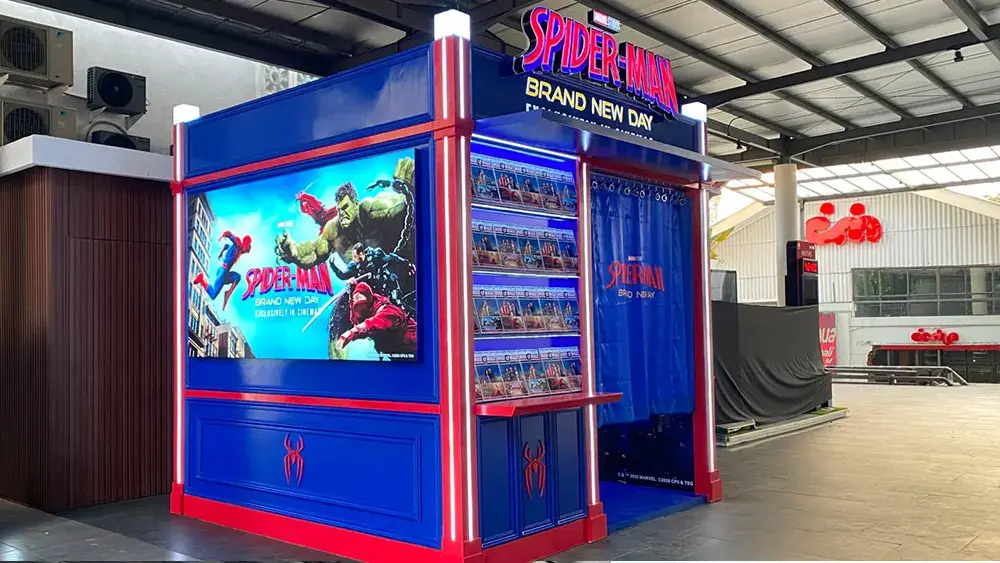
A visible, orderly queue pulls people in from the mall corridor or the street. Give it a clear lane, a sign with the expected wait, and something to watch, such as a screen looping earlier results from guests who agreed to be shown. On the Spider-Man themed booth we built for Sony Pictures Indonesia as on-ground creative branding, the booth and display shelves carried the film's identity strongly enough that the line in front of it became part of the setup.
Crew roles around the booth
One operator behind a laptop is not enough. Plan for at least one person managing the queue and explaining the mechanic, one inside the booth directing poses and looking after props, and one at the print or send point making sure the result reaches the guest. That last person usually handles the data consent step, so brief them carefully on what they can and cannot say. For days longer than eight hours, rotate shifts. Late-afternoon visitors judge the brand by how they are treated, not by how fresh the crew was at opening.
How much branding belongs on the photo
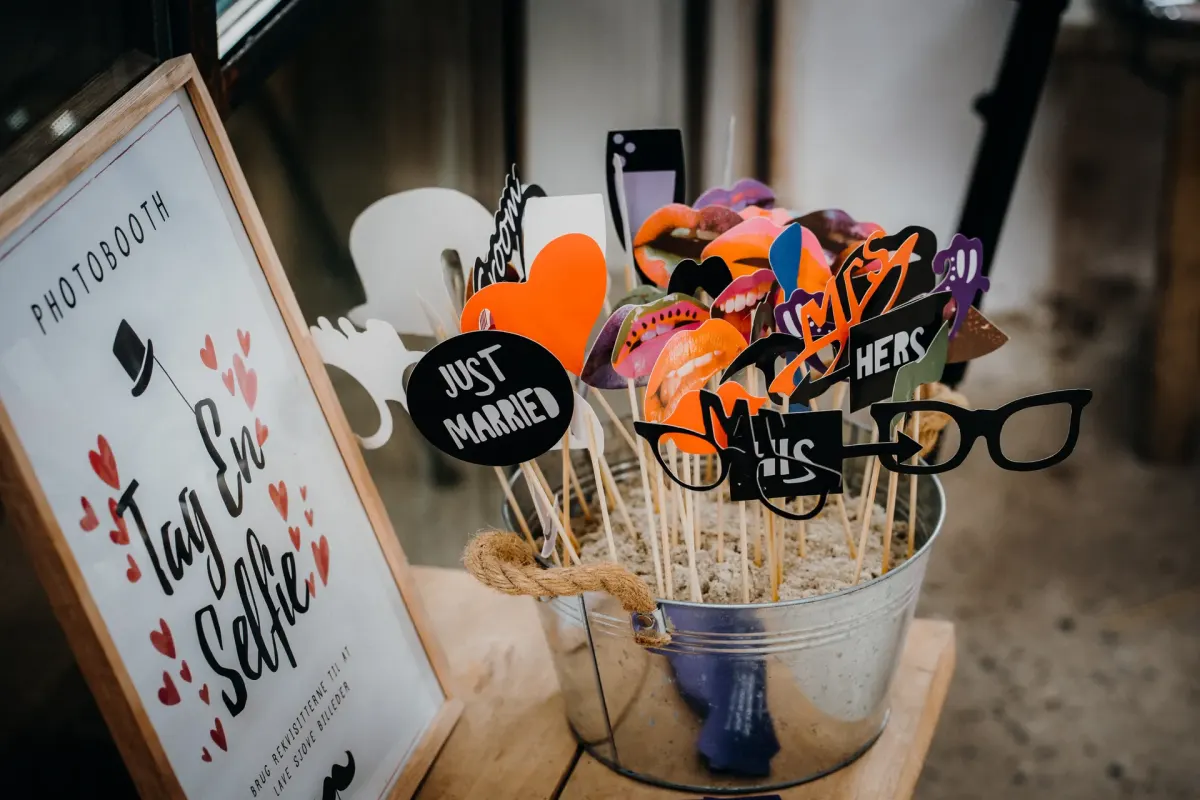
The output is the piece of media that travels furthest, so there is always pressure to fill the frame with logos and taglines. Frames that look like ads rarely get posted. People share pictures in which they look good, funny, or part of something that is happening.
Our rule of thumb: let the brand show through colour, props or a backdrop that could only exist at this activation, and keep the logo to one placement that never covers a face. If there is a campaign hashtag, set it small at the bottom of the frame. Printed frames can carry a little more branding than digital ones, since a print sits on a shelf at home rather than competing in a feed.
For licensed characters or film assets, confirm that the rights holder has approved their use in the frame. The same applies to music in 360 videos or GIFs: use audio with clear licensing.
Site issues that stall photo booths in Jakarta
Most day-one problems come from the venue, not the camera. Check these during the site survey rather than on load-in day:
- Power: printers, lights and screens all run at once. Ask for a circuit separate from neighbouring tenants and bring backup for outdoor events.
- Connectivity: do not rely on venue Wi-Fi. The software should hold outgoing files and resend automatically when the signal returns.
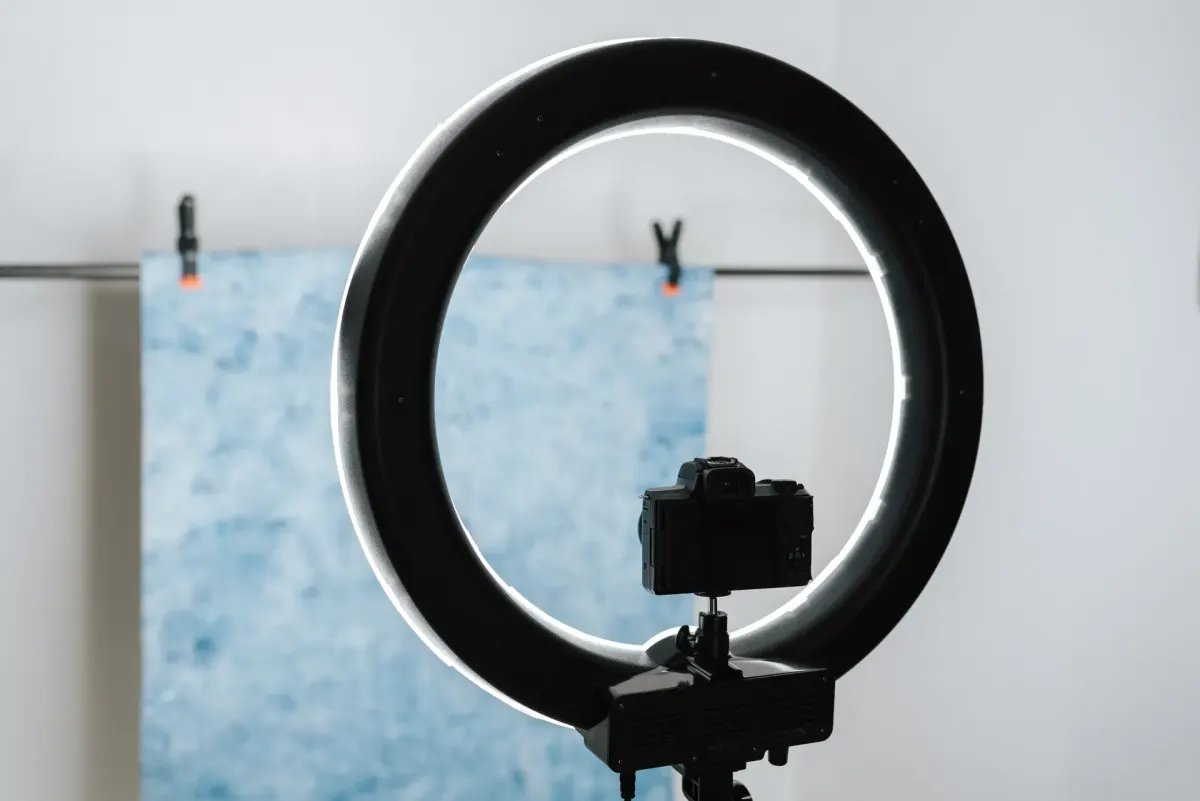
- Light: in semi-open areas, low afternoon sun can come in from the side and shift skin tones. Test at the same hour the event will peak.
- Print stock: calculate from daily capacity and keep a reserve for reprints.
- Heat: a closed booth with a printer and PC heats up fast at an outdoor Jakarta event. Build in ventilation.
After the survey, run a full rehearsal with the final frame, final software and people who have never seen the booth. Internal crews know the flow too well to spot the confusing parts.
Visitor data and Indonesia's Personal Data Protection Law
A booth that sends results by WhatsApp or email is collecting personal data, and a photo of someone's face counts as personal data under Indonesia's PDP Law (UU PDP). Ask for explicit consent on screen before capture or data entry, in plain language. Keep consent to receive the photo separate from consent to receive marketing, and never pre-tick either box.
Collect only what you will use. If the goal is sharing photos, a phone number or email is enough. Decide up front how long data and image files are kept, who holds them and when they are deleted. If you want to show guest photos on a large screen or on the brand's social accounts, ask for that permission separately. For anything more specific, bring the brand's legal team in before the software is configured.
Placing the booth near out-of-home screens
A booth only reaches people who are already standing nearby. To pull people from further away, place it within sight of LED screens that can alternate a call to action with approved guest photos. At Agora Lifestyle Mall in Tanah Abang, Central Jakarta, for example, we manage several screens, including the 4 x 7 m LED Agora Skydeck and the 14.72 x 2.08 m screens on Pillar L2 and Sunken Garden L1. A booth visible from those screens gives the on-screen message an obvious next step.
For activations in public space around Bundaran HI, the three-sided robotic LED Mandarin facing the roundabout can run teaser creative in the days before the booth opens. Any public-space activation needs its own location permit and advertising tax calculation, so check the site plan with our team before production starts. Other screens and sites are listed on our media page.
What drives the cost of an interactive photo booth
Cost does not scale with event days alone. The main drivers are the format, the number of booths needed to hit the participant target, how custom the booth and props are, software and frame development, printing, crew per shift, and venue, permit and logistics costs. Multi-city or multi-site runs add freight and re-installation.
The fastest route to an accurate quote is to send the activation goal, likely venues, dates and participant target. From that, the team can recommend a format and booth count before any design work begins.
Before you brief a supplier
Have three things ready: one primary goal (shares, data, or product trial), a shortlist of venues with their peak hours, and brand assets cleared for use. With those in hand, format, booth design and a capacity plan can be agreed in one round of discussion. See how we run these projects on our on-ground digital activity page, then contact the 8infiniooh team on WhatsApp +6282288108888 for site recommendations and a quote.