An AR experience at a brand event earns its floor space when three things happen: visitors understand what to do within five seconds, they see themselves on screen, and they leave with a photo or clip they actually want to post. Miss one of those and the setup turns into a glowing screen in the corner of the booth that mostly the promoters play with. For brands and agencies planning AR for an activation in Jakarta, the hard decision is matching the AR format to the floor area, the visitor flow and the venue lighting. The technology itself is the easy part.
The question comes up most in the run-up to year-end. Jakarta malls fill with families during the December school holidays, and several brands often pitch for the same atrium in the same week. AR can give a booth a reason to be visited, provided the planning starts from site conditions rather than from a demo reel.
Four AR experience formats for brand events
"AR" means different things to different vendors. Pin down which of these four you are buying before the brief goes out, because each has its own space needs and queue capacity.
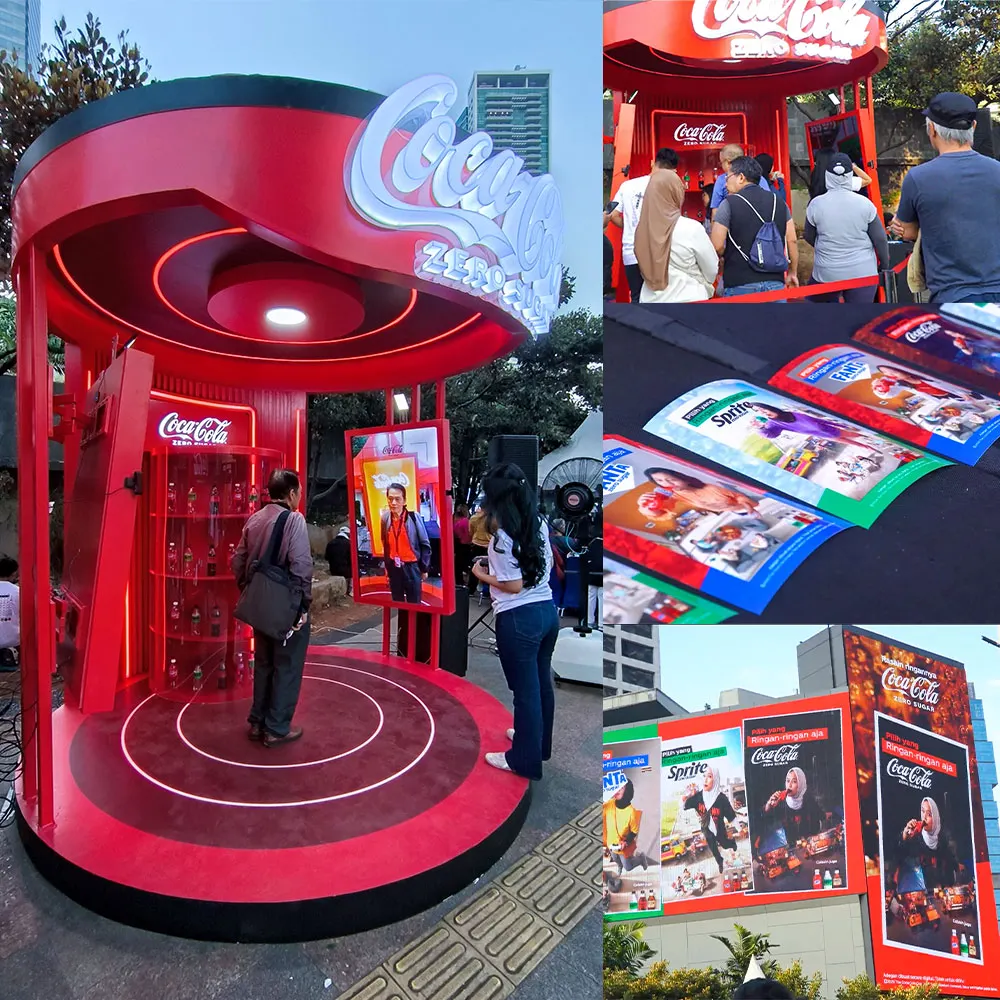
AR mirror
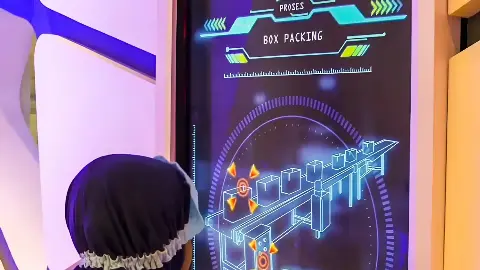
A camera sits above a portrait screen. The visitor stands on a floor marker and sees themselves wearing a costume, standing next to a character or holding a virtual product that tracks their movement. Nobody needs a phone or an explanation, which is why this is the format crowds pick up fastest. The trade-off is throughput: one screen handles one or two people at a time, so cap each session at 30 to 60 seconds or the queue stalls.
WebAR via QR code
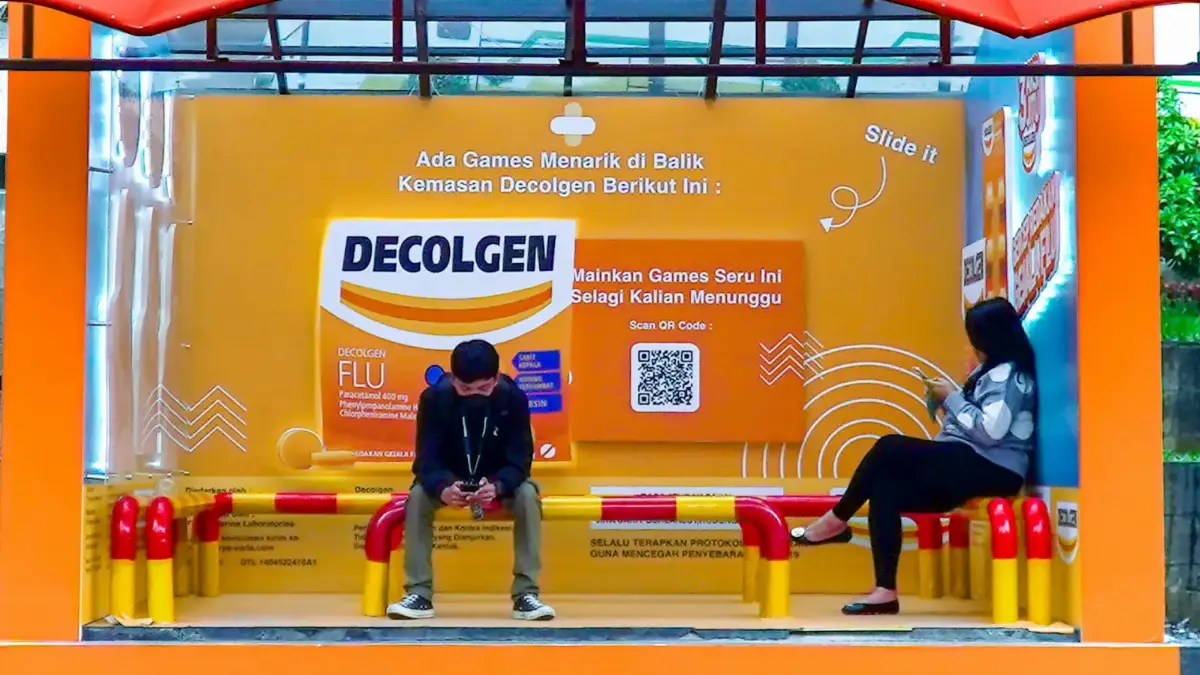
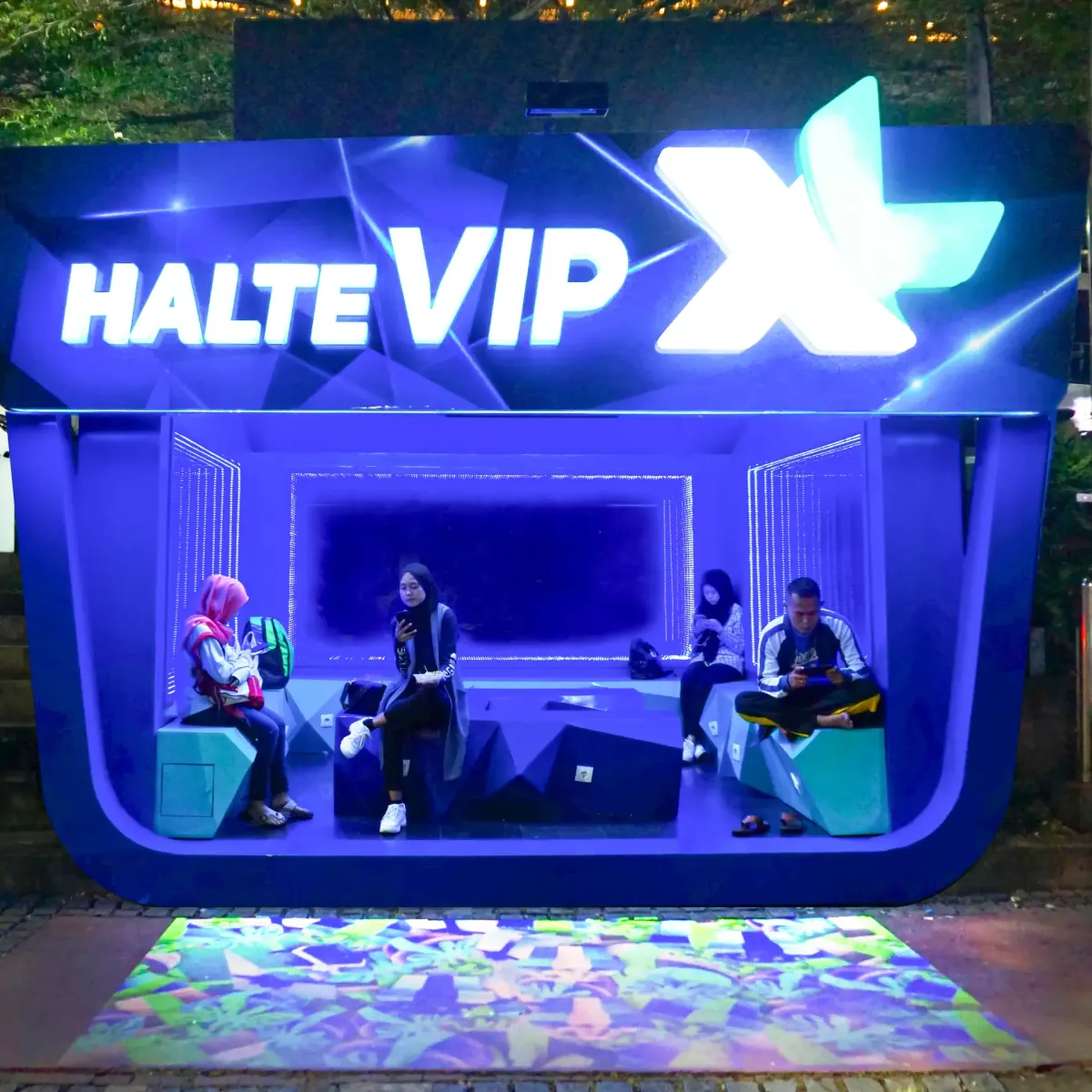
Visitors scan a QR code, the phone browser opens the camera and the 3D object or filter appears with no app download. Capacity is generous because everyone brings their own device. Connectivity is the weak point. In basements, exhibition halls and packed atriums, a heavy WebAR page can fail to load, and people rarely try twice. Keep 3D assets light and ask the venue for a dedicated Wi-Fi network where possible. The QR does not have to live inside the booth, either. A branded bus shelter gives people a few idle minutes, which is enough time to scan a code and try a short piece of content.
AR on a large screen
A camera covers a stage or standing zone and the composited result plays on a large LED. One person plays while dozens watch. It suits launches, concerts and open-air activations, because the audience becomes part of the show and the queue builds itself.
AR portals and in-booth scenes
Visitors hold a tablet or their own phone and watch the booth change: a blank wall becomes a landscape, a pack shot opens into an animation. This only works when the physical booth and the digital content are designed together from day one. Bolt the AR on after the booth is built and the markers and viewing angles almost never line up.
| Format | Space needed | Players per session | Visitor takeaway |
|---|---|---|---|
| AR mirror | One wall plus a marked standing zone | 1 to 2 | Photo or video via QR |
| WebAR | Almost none | Many at once | Recording on their own phone |
| AR on large LED | Camera zone and a big screen | 1 player, large audience | Highlight clip |
| AR portal | Purpose-built booth | Small groups | Photo inside the set |
When another interactive format beats AR
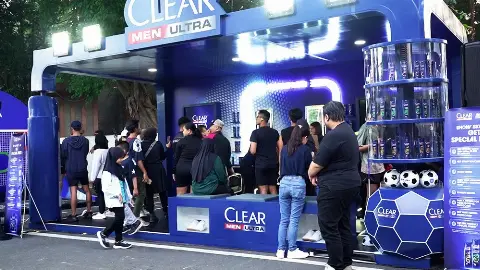
AR is the wrong answer for some briefs. If the goal is physical energy, say for an energy drink or a sports product, an interactive floor or a motion-based game usually performs better. The rules are obvious at a glance (step, kick, chase the score) and bystanders get pulled in because the movement reads from across the hall.
If the goal is to transport people into a story, for example a children's product framed as an adventure, VR delivers an immersion AR cannot. The cost is operational: one headset per person, longer sessions and a crew member sanitising headsets between players. With throughput that low, VR makes sense when depth of experience matters more than headcount.
AR wins when the brand wants people to see themselves with a product or character and then share it. That is why film releases, beauty, fashion and mascot-led products lean on it. If your brief is really about competition and prizes, read our notes on brand activation gamification before you lock the format.
Venue checks to run before you commission content
When AR fails on site, the content is rarely the problem. The usual cause is a venue nobody walked before production started. Send someone at the same hour as the event, since atrium light at 11 a.m. looks nothing like it does at 7 p.m.
- Light: daylight from a skylight or a spotlight behind the visitor wipes out body tracking. Point the camera away from the light source.
- Background: shoppers walking behind the player confuse the tracking. A plain backdrop behind the standing marker helps a lot.
- Internet: test upload speed, not only download, if visitor photos go to a server.
- Power: screens, PCs and extra lighting need a stable supply. Ask mall management what load you are allowed and whether a generator is required.
- Queue space: plan a waiting area that keeps walkways clear. Malls will ask you to tidy a queue that spills into the corridor.
Build a fallback as well. A looping video on the same screen means the booth never looks dead if a camera or PC drops out mid-afternoon.
Scripting the session in front of the screen
Shoppers decide whether to stop in a few strides, so script the AR session as tightly as a short ad.
- Pull from a distance: the screen shows the previous player in action, not a static logo. A moving person draws curiosity far better than a brand mark.
- One-line instruction, such as "Stand in the circle and raise your hands." If it needs two lines, the content is too complicated.
- Payoff between seconds 10 and 20: the costume changes, a character appears beside the player, the product transforms.
- Takeaway: a short photo or video with a brand frame that never covers the face.
- Follow-up: the download QR also opens a promo page, a voucher or the nearest store location.
You still need promoters. Their job is to greet whoever slows down in front of the booth and to have the next player on the marker the moment the previous session ends, not to hand out flyers.
Linking the booth to nearby LED screens
An AR booth only reaches people who are already close to it. LED screens inside the venue or on the surrounding roads extend that reach, as long as each screen has a defined job.
Inside a mall, indoor screens act as a second stage. Agora Lifestyle Mall in Tanah Abang, Central Jakarta, has a 4 x 7 m LED at the Skydeck plus LEDs at Pillar L2 and the Sunken Garden on L1. Rotating clips of the best AR moments on screens like these tells shoppers on other floors that there is something to try. The same approach works at M Bloc on Jl. Panglima Polim, which has an LED Mural and LED Facade. Any content showing visitors' faces still has to follow the screen operator's playout rules and the consent of the people featured.
On the road, the job changes. The Robotic LED at the Mandarin Oriental faces Bundaran HI with two 27 x 9 m sides and one 8 x 16 m side. It is the place for teasers and announcing where the activation is happening, not for QR codes, since drivers will not scan anything from behind the wheel. QR calls to action belong on screens people view up close while standing or walking slowly, which in practice means indoor mall screens.
Splitting roles this way also makes measurement cleaner: QR scans from mall screens, sessions at the booth and posts using the campaign hashtag can each be read on their own. We cover the framework in our guide to measuring brand activation success.
Visitor photos, personal data and children
Almost every AR experience captures visitors' faces. Once those files are sent to an email address or WhatsApp number, the brand is processing personal data under Indonesia's Personal Data Protection Law (UU PDP). Our working practice: show a short consent screen before capture, state what the photo will be used for, offer a QR download that needs no phone number, and set a date when files are deleted from the server.
Holiday season brings many young participants. Get consent from the accompanying parent, and do not show children's faces on public screens without permission. For obligations specific to your campaign, bring the brand's legal team in at concept stage.
What drives cost and lead time
There is no standard price for an AR activation, but the cost drivers are things you control in the brief. Content complexity comes first: a simple face filter is far quicker to build than a fully animated 3D character responding to full-body movement. Then hardware, meaning how many screens, cameras and PCs, and whether they are rented or custom-built. Duration and number of locations matter, since three days in one mall is a different job from a multi-city roadshow. Add the operations crew for queues and equipment, plus venue fees, mall permits and LED airtime if you want the AR output on a screen.
On timing, leave room for an on-site test. Content that runs smoothly in a vendor's studio often needs recalibrating at the venue because light and camera distance differ. Schedule at least one full rehearsal before opening day. If you are using licensed film or cartoon characters, submit materials to the licensor early, because that approval step is often the slowest part of the whole schedule.
Next step for your team
Before you talk to any vendor, prepare three answers: which visitors you want to attract, what they should walk away with, and where and when the event runs. With those, our team can recommend an AR format, scope the hardware and suggest supporting LED screens near the venue. See what our on-ground digital activity service covers, then send a short brief via WhatsApp +6282288108888 or our contact page for a recommendation and quote.