Product sampling in public spaces in Jakarta works when three things are settled before the first sample leaves the box: a location where people actually stop, a mechanic that gets them to try the product on the spot, and a stock plan that does not collapse into a scramble within the first two hours. Those three decisions matter more than the number of units printed on the brief. We still see plans built around "hand out X thousand samples in a week", yet a sachet grabbed mid-stride and dropped into a bag is rarely opened.
Late October is a sensible moment to plan this. The rainy season is starting, commuters spend longer under bus shelters, weekend crowds move into malls, and brands are locking in their year-end retail calendars. What follows is how we build a sampling programme in Jakarta and the surrounding cities, from site selection to reading the results.
Which products suit product sampling in public spaces
Street-level sampling makes the most sense for products whose benefit can be felt in under a minute: ready-to-drink beverages, snacks, mints, balms and medicated oils, skincare testers, fragrance, even apps that can be tried on a phone. Someone waiting at a bus stop is not going to listen to a pitch. They want to smell it, rub it on, taste it, and decide for themselves.
Products that need a conversation, such as high-ticket electronics or financial products with layered terms, belong in a staffed demo booth inside a mall. Sampling can still play a part there, but as a conversation opener rather than the core of the programme.
A useful filter for international brand teams: can a passer-by notice the difference without reading the pack? If yes, public sampling deserves a line in the media plan. If the difference only shows up in a spec sheet, put the budget into a demo format instead.
Choosing a site where people pause, not just where it is busy
Footfall on its own is misleading. A packed pavement at 6 pm looks promising on a site visit, but those people are chasing a bus or a train and will not stop for anything. What you are buying is dwell time: minutes in which people stand still because they have to wait or because they are in no hurry.
Bus shelters turned into trial rooms
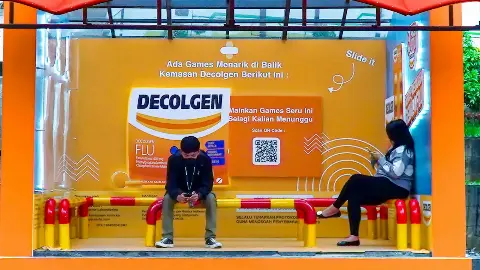
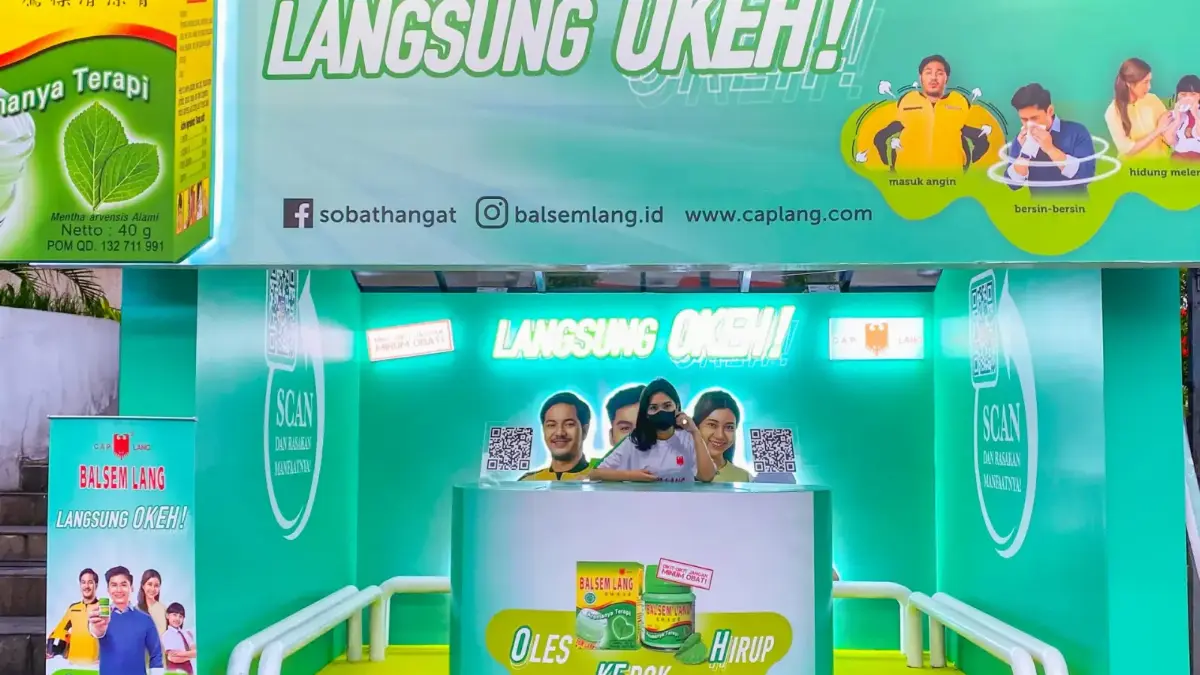
Shelters come with waiting time built in. Under our on-ground creative branding format, an entire shelter can be wrapped in the brand's visuals and fitted with a counter in the middle for sampling. The cover photo of this article shows the idea: a shelter themed around a herbal balm, with a central counter, QR codes on both side walls and a roll-up banner facing the pavement to pull people in. Commuters can try the product without leaving the spot where they are waiting for their bus. The format is described on our on-ground creative branding page.
Car Free Day around Bundaran HI
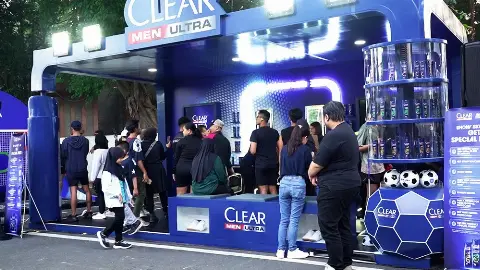
Sunday mornings on Sudirman-Thamrin are a different crowd: people walking slowly, jogging, cycling, willing to stop. The area is also ringed by large screens, including LED Mandarin at the Mandarin Oriental, a three-sided robotic LED (27 x 9 m and 8 x 16 m faces) overlooking Bundaran HI, and the LED Sarinah screens along Thamrin. A sampling booth at Car Free Day can run alongside spots on these screens at the same hour, so someone who sees the ad finds the place to try the product a short walk later. Activities at Car Free Day need clearance from the organisers and the city, so the date has to be submitted well in advance.
Malls and lifestyle venues
Mall atriums suit longer runs of two to four weeks because weather stops being a variable. Agora Lifestyle Mall, for example, carries several indoor LED screens such as LED Agora GF (2.56 x 5.76 m) and LED Agora Skydeck (4 x 7 m); a booth placed near one of them can use that screen to direct shoppers to it. The same logic works at M Bloc on Panglima Polim, which fills up in the late afternoon and evening, and around Mall Metropolitan Bekasi, where our 6 x 12 m LED sits on the pedestrian bridge over Jl. KH. Noer Ali.
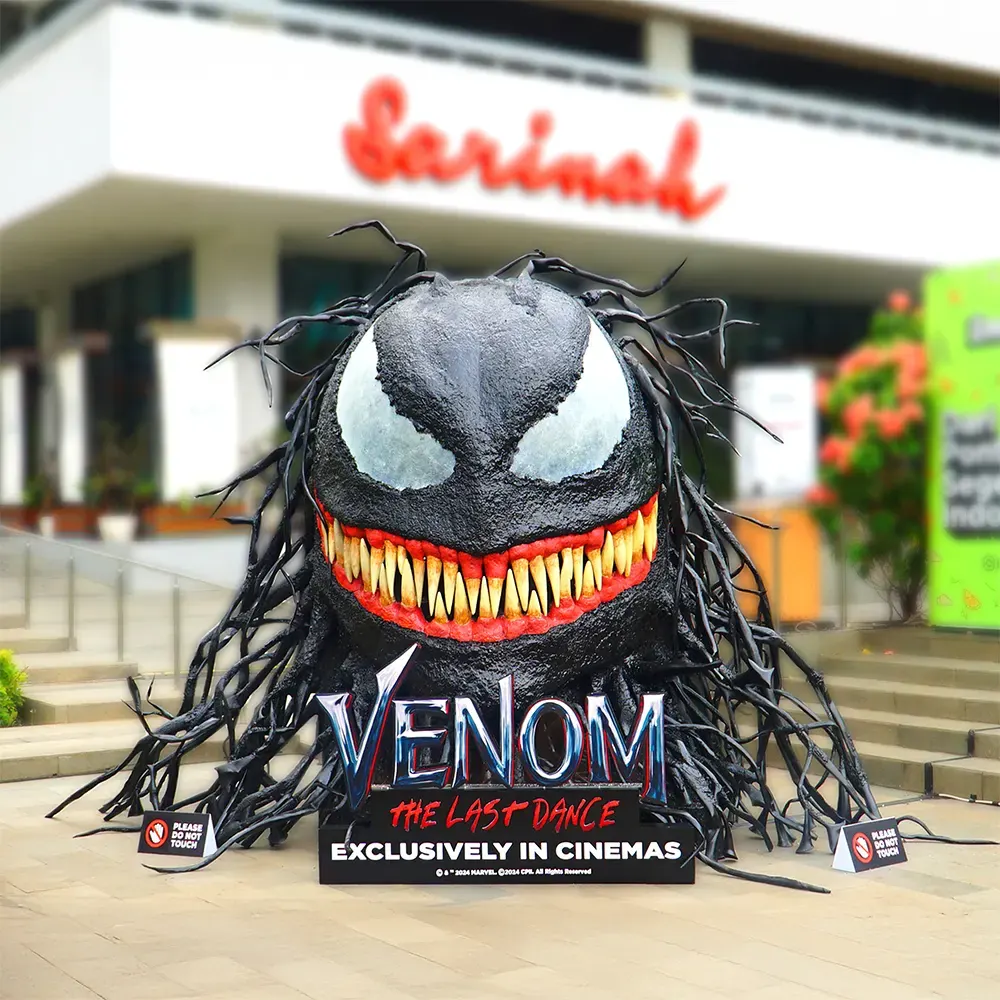
A striking installation can also do the stopping for you. Sony Pictures Indonesia's Venom campaign placed an oversized Venom head sculpture on the forecourt in front of Sarinah, and people stopped to photograph it. Put a sampling counter a few steps away from an object like that and the hardest part, getting someone to pause, is already done.
Sampling mechanics: from "grab one" to "try it here"
A sample tried in front of your crew is worth far more than one carried home. You see the first reaction, you can answer objections, and you can point the person to the next step, whether that is the nearest store or an app download. The mechanics we use most often:
- Try at the counter. Works for drinks, balms and skincare testers. One counter with two or three crew can handle a steady flow if the queue lane is clearly marked.
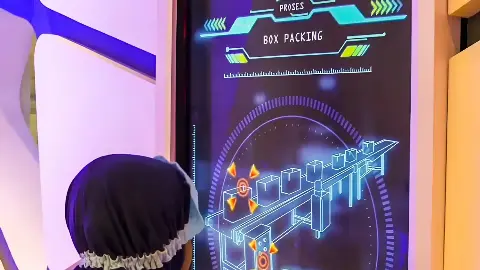
- A short game before the sample, such as an interactive floor or a motion-sensing screen. Keep it to 30 to 60 seconds or the queue backs up onto the walkway.
- Scan a QR code to redeem a sample or voucher. This leaves a countable digital trail, but the landing page has to load fast on a congested mobile network.
- Trade in an empty pack of your existing product for a full-size new variant. Good for launches, though the redemption terms need the venue's approval first.
If the mechanic asks for a phone number or email, show a clear consent notice. Indonesia's Personal Data Protection Law requires visitors to know what their data will be used for, and crew should be able to explain it in one sentence. Data you do not need is better left uncollected.
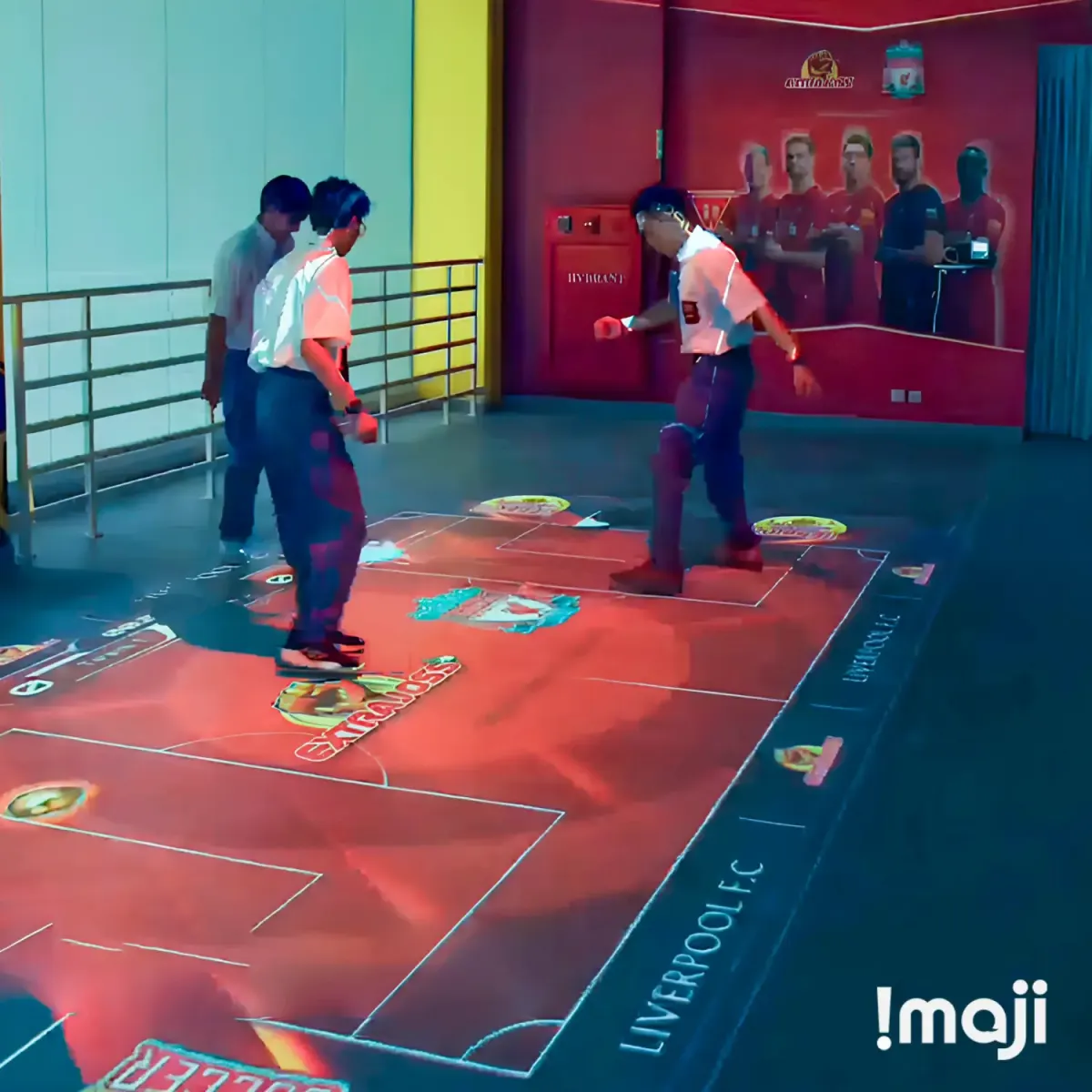
Another example of an interactive mechanic is Bintang Toedjoe's activation on a football-pitch interactive floor, where visitors play with their feet on a projected field. Formats like this fall under our on-ground digital activity service and can end at a sampling counter at the exit of the play area.
The logistics that usually go wrong
Most field problems are not creative problems. They are stock and crowd-flow problems. Samples run out at 11 am when the booth is open until 9 pm. The queue spills across the pedestrian path and building security asks you to close. Cold drinks turn warm because nobody brought a spare cool box.
The fix is to allocate stock per hour rather than per day. Map the peak for each site, mornings for Car Free Day, lunch and home-time for shelters in office districts, late afternoon into evening for malls, and weight your allocation to those hours. Keep back-up stock in a nearby storeroom or a logistics vehicle, not stacked behind a cramped booth.
For anything running in November or December, plan for rain. Shelter booths are covered, but open-air setups need a tent, non-slip flooring and covers for printed material. Bring dedicated bins for sample packaging as well: empty sachets scattered on the pavement damage both the brand and your relationship with the venue.
Finally, brief the crew on three things: a one-line product benefit, answers to the questions that come up most, and what to do when a visitor raises a complaint or an allergy concern.
Permits and rules to clear before the activation day
Public sampling involves several parties at once. Shelters and pavements fall under facility operators and local government, mall atriums under building management, and Car Free Day has its own rules on permitted activities. The product handed out must hold a valid distribution licence, and some categories carry age limits for recipients. All of this takes time, usually several weeks, so sampling should be planned alongside the rest of the media plan rather than a week before launch. Our team maps the permits each location needs; advertising permits and local tax vary by area, so discuss the specifics with us directly.
Measuring sampling results without guesswork
Units distributed is a logistics number, not an outcome. What you want on record is how many people actually tried the product, how they reacted, and how many took the next step.
| What to measure | How to capture it | Field note |
|---|---|---|
| People who tried on the spot | Hourly manual count by crew | Keep separate from samples merely taken |
| Digital follow-up | QR scans, unique voucher codes per site | One code per location so sites can be compared |
| Sales at nearby stores | Voucher redemption at partner outlets | Agree the mechanism with the retailer before launch |
| Reactions and objections | Crew notes at the end of each shift | Use them to sharpen the crew script the following week |
We cover activation measurement in more depth in how to measure brand activation success.
What drives the cost of a sampling programme
Cost depends mostly on the mix of location and duration. The main factors are venue rental or permits, the number of active days, crew per shift, booth production or shelter dressing, interactive technology if used, sample storage and transport, documentation, and any supporting airtime on nearby LED screens. The samples themselves are normally supplied by the brand. Since every combination differs, we quote once we know the product, city and campaign window.
Next step
Send us four things: the product and sample format, the city or district you want to reach, the campaign period, and the action you want people to take after trying it. Reach the team on WhatsApp at +62 822 8810 8888 or through the contact page, and we will come back with proposed sites, a mechanic, and the nearby LED screens worth pairing with it.