Outdoor advertising for banks and fintech in Indonesia has to do two jobs that one creative rarely handles well. It has to make a name feel established and safe, and it has to push people toward a specific action: download the app, open an account, use the card for year-end shopping. Regional and international teams that plan Jakarta campaigns tend to get better results when they split those jobs across different sites and different creative. If your plan covers November and December, October is when to lock it in, because prime Jakarta corridors fill quickly and financial creative needs extra time for compliance review.
Why banks and fintech brands plan outdoor differently in Indonesia
Financial products have a long consideration cycle. Nobody opens a current account because of one screen at a traffic light. What outdoor does is make the bank or app familiar before the comparison starts, so it already feels like a serious option. That sense of physical presence is hard to build with digital ads that disappear after a scroll.
The second difference is regulation. Advertising for financial services in Indonesia falls under OJK (the Financial Services Authority) consumer protection rules: information must be clear and not misleading, and ads usually carry a line stating the company is licensed and supervised by OJK. Banks that are members of the deposit insurance scheme typically show the LPS logo as well. Each of these elements takes space, and on a screen viewed from a moving car, space is the scarcest resource you have. Expect the client's legal and compliance team to sign off every frame, and build that time into the production schedule. Global templates often need reworking at this stage, so brief the local adaptation early.
Third, the audience is spread out. A premium credit card targets office workers in central Jakarta, while savings products, subsidised mortgages or paylater services target young families in Bekasi, Bogor and Bandung. One flagship screen will not reach both.
Matching sites to campaign objectives
The most useful starting question is simple: who needs to see this, and which roads do they use every day? The table below is the framework we use when we first sit down with a bank or fintech team.
| Objective | Best-fit media | Example sites |
|---|---|---|
| Brand trust and stature | Large LED in the business corridor | LED Mandarin (robotic, 3 sides, facing Bundaran HI), LED Jamsostek on Jl. Gatot Subroto |
| Products for office workers | LED on routes into business districts | LED Dukuh Atas (Sudirman towards Senayan), LED Senopati (towards SCBD) |
| Retail and family products | LED on arterial roads and in satellite cities, commuter buses | LED Slipi, LED JPO Metropolitan Mall Bekasi, Transjabodetabek buses |
| App user acquisition | LED combined with on-ground digital activity | Corridor screens plus an interactive booth in a mall or public space |
The Thamrin, Sudirman and Gatot Subroto corridor
For stature campaigns this corridor is still where most banks start. LED Mandarin, on the Mandarin Oriental Hotel, has three faces (27 x 9 m and 8 x 16 m) looking onto Bundaran HI. As Indonesia's first robotic LED, its panels move into different configurations, which suits a launch moment. Bank Permata has run campaigns on it. LED Jamsostek on Jl. Gatot Subroto measures 15 x 30 m and has carried campaigns for Permata, BCA, UOB and Jenius. LED Dukuh Atas (7 x 14 m) catches Sudirman traffic heading towards Senayan.
The western arterials
If your audience is wider than central-city office workers, look west. LED Slipi on Jl. Letjen S. Parman (9 x 18 m) faces towards Semanggi, so it reads to traffic entering the centre from the west; BCA, Permata and Sun Life have all used it. LED Mega Anggrek has two 9 x 18 m faces: side A towards Tangerang and side B towards Semanggi, so a single location can serve both directions of the commute.
Bekasi, Bogor and Bandung
Savings, mortgage and micro-lending products are often more relevant outside Jakarta. BRI has used LED JPO Metropolitan Mall Bekasi (6 x 12 m) on Jl. KH. Noer Ali and LED Masjid Raya B in Bogor. In Bandung, BTN ran on LED Riau A, a 4 x 8 m screen on Jl. LLRE Martadinata facing towards Cicaheum. You can see every site with its size and facing on our media inventory page.
Creative that clears compliance and still reads from the road
The usual problem with bank creative on a videotron is that it was designed for print or social: interest rate, terms and conditions, disclaimers, regulator logos and three product benefits, all in one frame. From the road, none of it is legible.
A better approach is to split the information across frames. The first frame carries one message and the product name. The next carries the mandatory elements, such as the OJK licensing line and the LPS logo, at a size people can actually read. Rate details, fees and simulations move to a landing page. Avoid claims like "lowest rate" unless the client's legal team can prove them; beyond the financial-regulation risk, unprovable superlatives also breach Indonesia's advertising code of ethics (Etika Pariwara Indonesia).
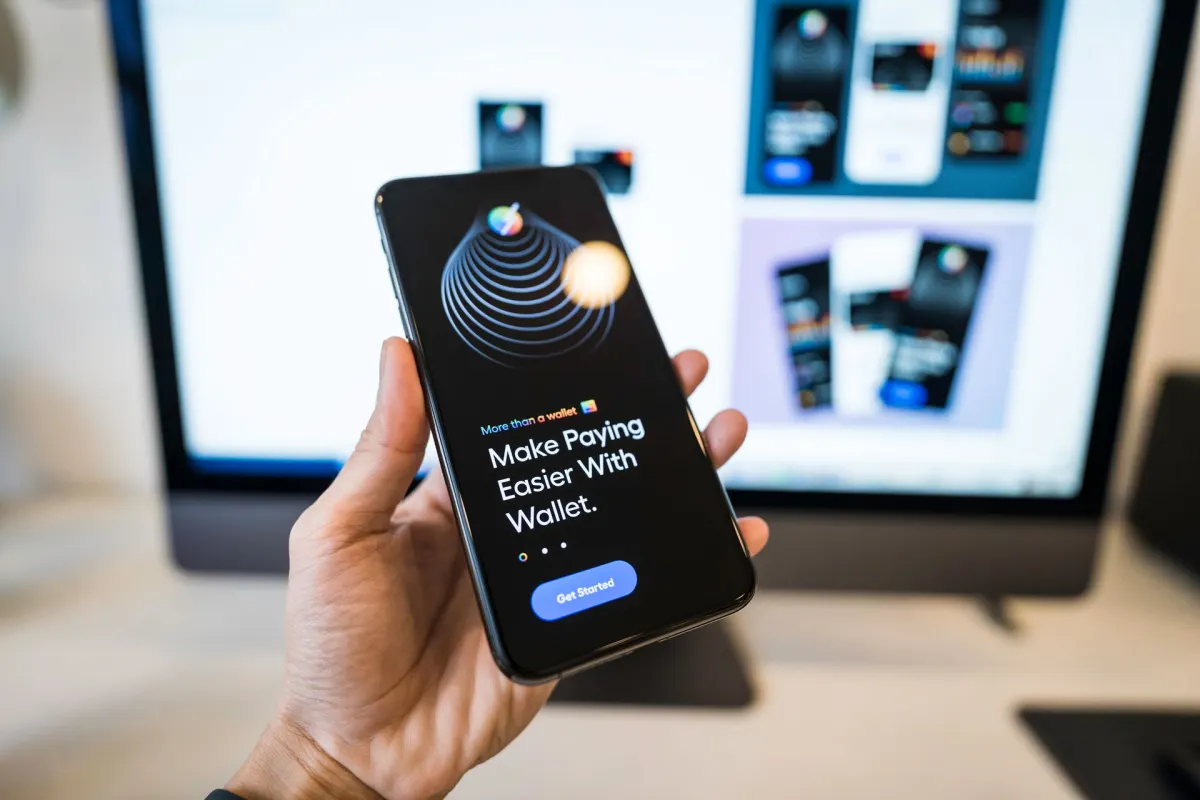
For fintech apps chasing downloads, a QR code on a roadside screen rarely works for drivers. It can work where people stop or walk: near bus stops, pedestrian bridges or screens inside malls. On the road, show an app name that is easy to type into the Play Store or App Store. Our notes on videotron ad creative for Jakarta drivers cover text size and frame count in more detail.
Buses and activations for products that need explaining
LED screens build the name, but products such as time deposits, insurance or paylater need more explanation. That is where transit media and on-ground activation come in.
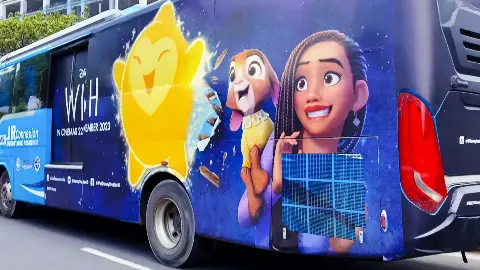
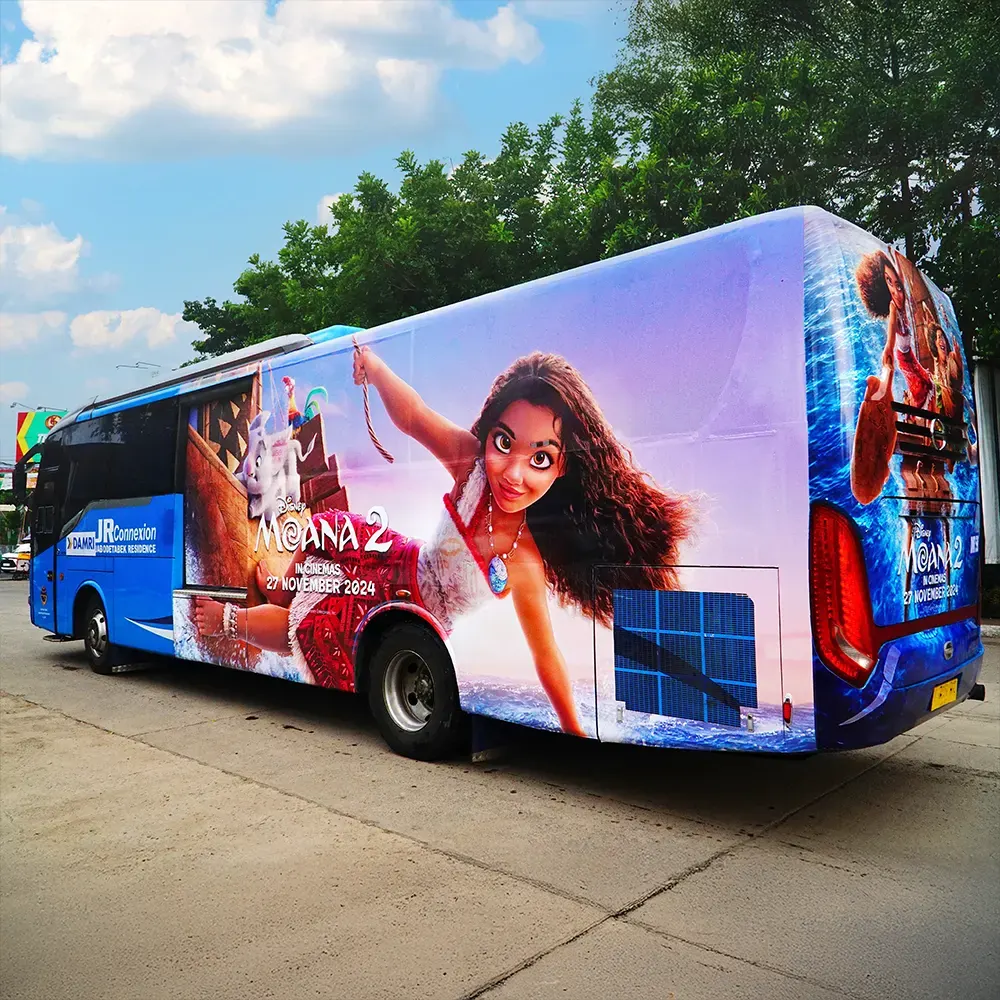
Transjabodetabek buses run daily on routes linking Bogor, Depok, Tangerang and Bekasi with central Jakarta, so the design travels with the commuters a retail product is trying to reach. A bus side gives you a wide surface for one big visual and one message; do not try to fit a rate table on it. Formats are listed on our transit media service page.
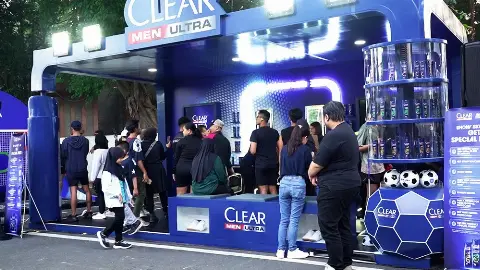
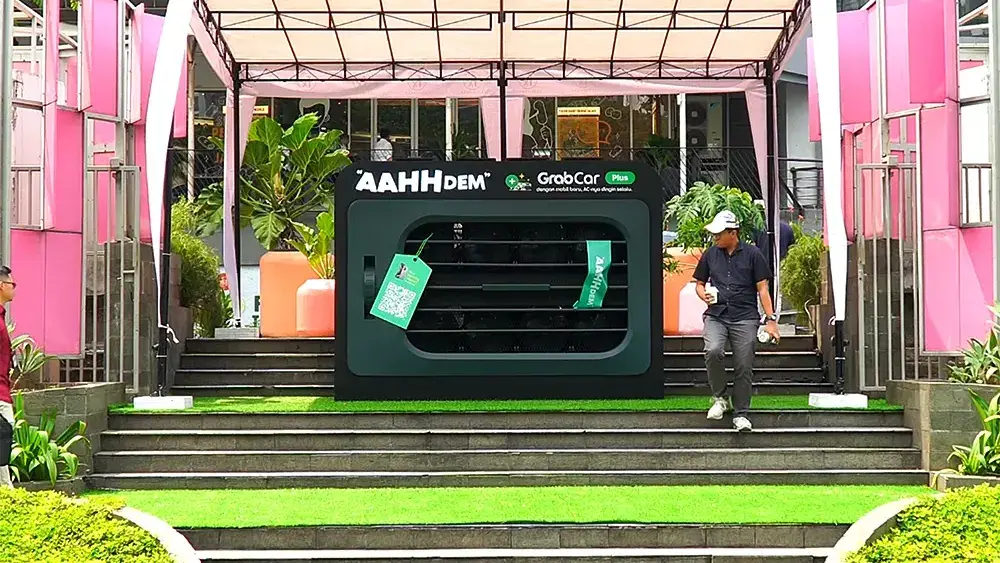
On-ground digital activity, whether an interactive booth, a screen game or a photobooth, gives you far more face-to-face time than any screen, enough to explain how a product works and help people try the app on the spot. One point matters a great deal for financial brands: any visitor data you collect, including phone numbers for a prize draw or sign-up, falls under Indonesia's Personal Data Protection Law (UU PDP). Design the consent flow up front, tell visitors what the data is for, and make sure on-site staff never keep data on personal devices.
The financial-category calendar from October to Ramadan
Late October to early November is the window to lock sites and finish creative review. December brings credit card and instalment promotions for holiday spending; around shopping districts and arterials, transaction-led messages usually beat pure brand messages. January suits financial planning, investment and savings products, when people set new-year goals.
Ramadan 2027 is expected to start in early February. For banks, the period means holiday bonuses (THR), zakat and homecoming travel (mudik), so creative and sites should be settled by December. If you plan to run year-end and Ramadan campaigns back to back, negotiate them as one package so the same sites do not go to another advertiser in between. More on the year-end window is in our piece on planning a year-end advertising campaign in Jakarta.
Reading the results without guesswork
Banks and fintech companies are used to clean acquisition data from digital channels, so it is fair to ask how outdoor gets measured. The answer is not a single number but a few signals compared before and during the flight:
- Brand or product search volume in the areas where the screens run, compared with areas without outdoor.
- App installs or account openings by city, especially if the campaign only runs in some cities.
- A promo code or short URL used only on outdoor creative, so it does not mix with other channels.
- Proof of play, photos and schedule reports, to confirm the creative ran as contracted.
Set this up before launch. Once the creative is live, it is hard to build a fair comparison.
What drives the cost
We do not publish rates here because the price depends on the mix you choose. The main factors are site and screen facing, size, slot length and frequency, contract length, season (December and Ramadan are usually the busiest) and local advertising tax. For transit, fleet size and flight length matter most; activation costs depend on the number of days, booth build and the digital content required.
Next step: before you contact us, have three things ready. Your objective (stature, acquisition or transactions), the cities and flight dates, and the status of your creative (cleared by compliance or still in draft). Send them to the 8infiniooh team on WhatsApp at +6282288108888 or by email through our contact page, and we will come back with a site recommendation and a quote.