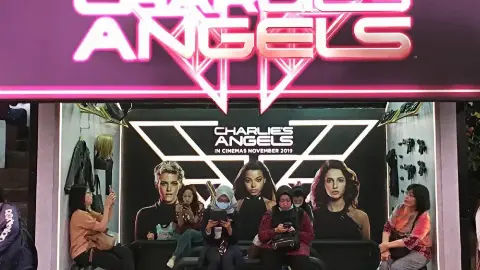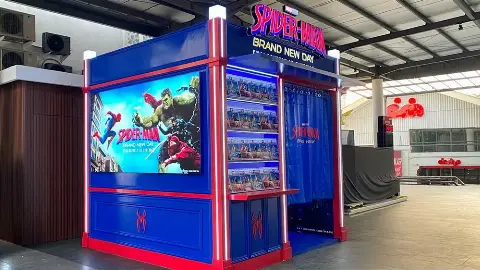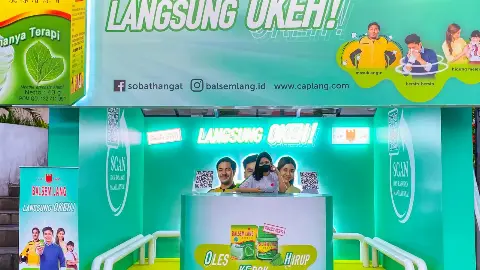
The booths that fill up at Jakarta events have usually done most of their work before the build starts. They sit where visitors already slow down, their message reads from across the hall, and the reason to step in is obvious. This event booth checklist follows the order we work in on site: reading the venue floor plan, deciding what people see from ten metres away, planning the interaction and the crew, and closing out after load-out. Use it to brief a fabricator or to pressure-test a booth proposal from your local agency.
Start with the floor plan, not the render
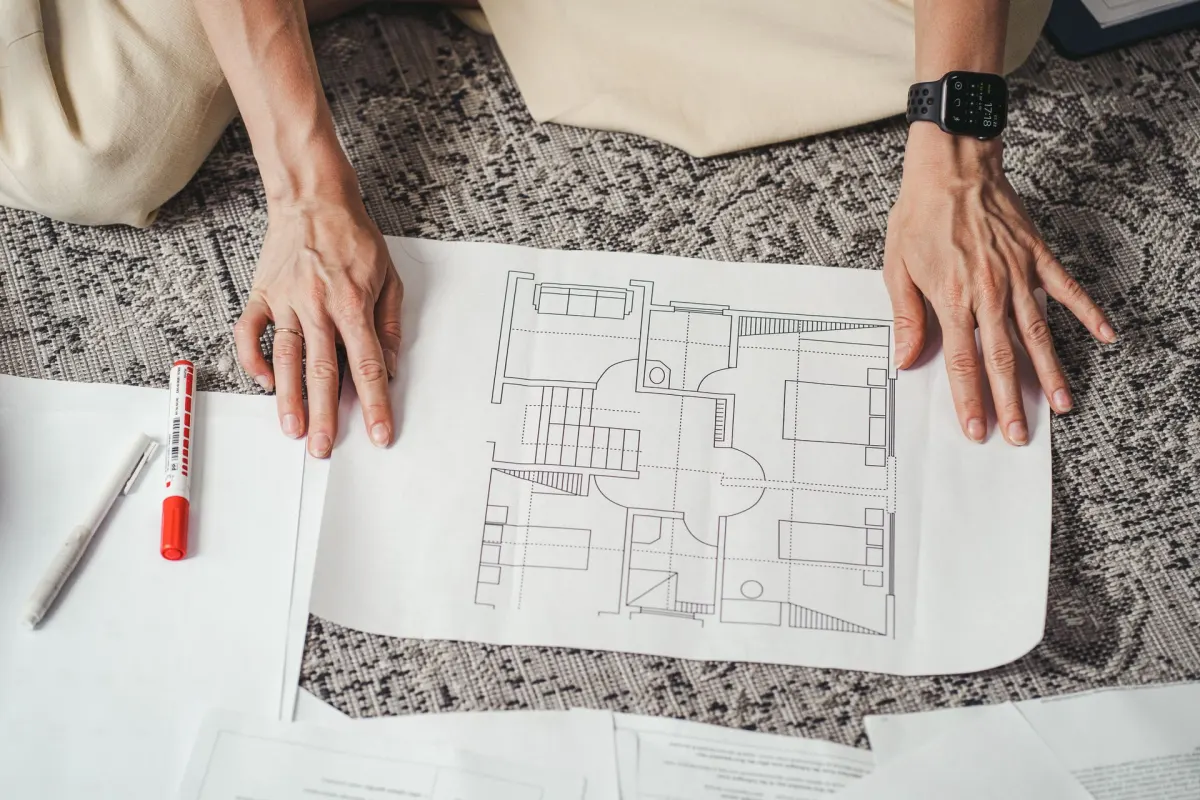
Most booth briefs open with a moodboard. We prefer to open the venue plan and ask two questions: which direction does most foot traffic come from, and where does it slow down? In Jakarta malls the slow points tend to be escalator landings, lobby entrances and the approach to the food court. At outdoor events they cluster around gates, ticket queues and the path to toilets and food stalls.
A corner plot open on two sides is almost always easier to fill than an inline plot open on one. The exception is a corner pressed against an escalator mouth, where people move fast and have no room to stop. Ask the venue for a plan showing fire exits, columns and power points, then mark where a small crowd could stand without blocking an evacuation route. That waiting space matters as much as the booth footprint.
One habit pays off every time: visit the venue on the same weekday and at the same hour as the event, a week or two ahead. Walk from the main entrance to the proposed plot and note the moment the booth position becomes visible. If it only appears two steps before people pass it, the design has to rely on height, light or sound rather than table dressing.
The event booth checklist to close before design sign-off
Every item below should be answered before the fabricator cuts material. Changing size or position once production has started almost always costs time and money.
- The booth's job in one sentence: product trial, consented data capture, on-the-spot sales, or social content. Pick one as the primary goal.
- Plot size, height limit and venue rules on materials, ceiling rigging and floor load.
- Visitor approach direction and which sides of the booth are open.
- One headline message readable from a distance, plus logo and product.
- The interaction mechanic, how long it takes, and how many people it serves at once.
- Power, internet and socket positions for screens, lighting and interactive kit.
- Crew numbers per shift and who does what.
- Load-in and load-out windows and goods vehicle access.
- How results will be recorded: visits, samples handed out, sales, or content posted.
What reads from ten metres away
Visitors judge a booth in a few seconds without breaking stride. From a distance they register shape, colour and maybe one line of copy. A logo tower, an arch or a portrait LED screen does more than a backdrop full of text. Put the headline high, above the heads of the people standing in front, so it is still visible when the booth is busy and the crowd blocks the lower half.
Keep the front open. A long counter on the front line feels like a ticket window and makes people hesitate. Move tables to the back or the sides and leave clear floor at the front that invites a step in. Lighting is the other common blind spot: a booth in a mall atrium can look dim next to the lit shopfronts around it, and an outdoor booth loses its pull once the sun goes down. Budget for lighting at the design stage, not on the day.
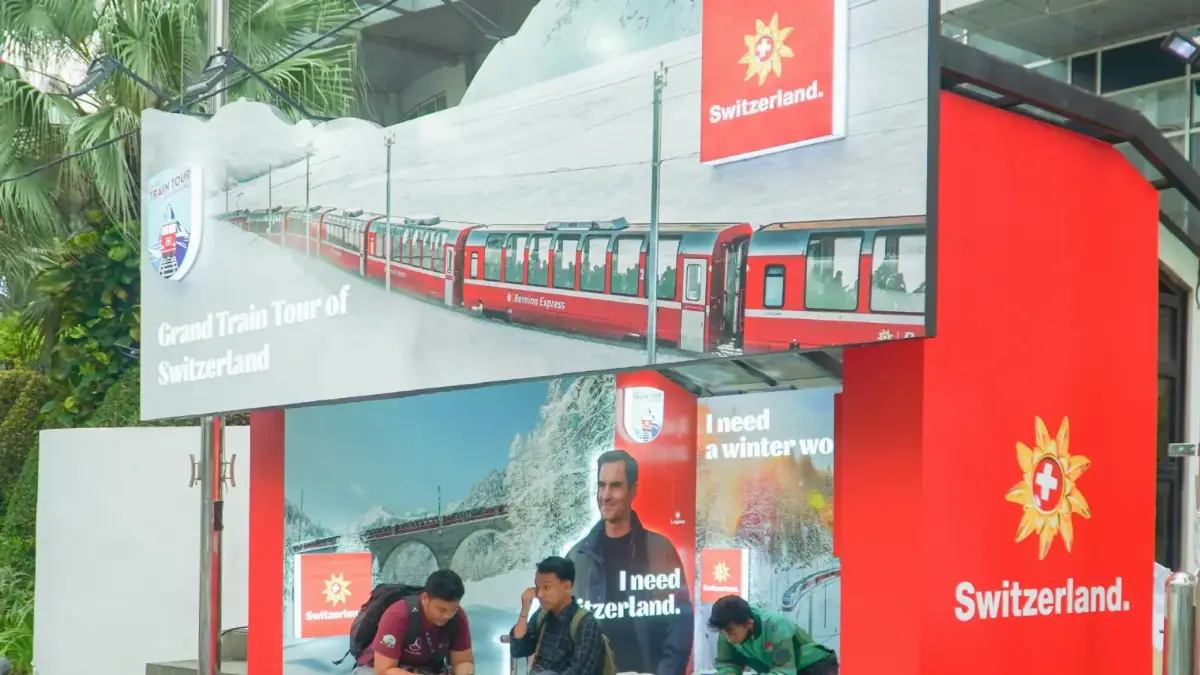
The creative branding 8infiniooh built for Switzerland shows the principle at street scale: a bus shelter was turned into a themed structure with a snow-capped mountain roofline and a red train visual, so the theme reads as a shape before anyone reads a word. A booth works the same way. Form and colour do the first job, copy follows.
Interaction that earns the step inside
Short, self-explanatory mechanics
The mechanic that fails most often is the one that needs explaining. If staff need a minute of talking before a visitor can start, no queue forms. Test the mechanic on someone outside the project: can they work out what to do just by watching the person ahead of them? We cover scoring systems and game formats in more depth in our piece on brand activation gamification.
Prizes and queues
Prizes draw people, but prizes unrelated to the product mostly attract souvenir hunters. Tie the reward to the product experience: a full-size sample, a voucher redeemable at a nearby store, or a branded photo print. A visible queue helps, because a busy booth makes passers-by curious. It has to be tidy, marked and kept clear of neighbouring tenants' frontage. Blocked tenants complain to the mall, and a booth can be told to change its layout mid-event.
Digital elements and visitor data
Photo booths, touchscreens, motion games and AR all give people another reason to stop, provided the hardware is reliable. Bring spare devices and an internet connection that does not depend on venue Wi-Fi. If the mechanic asks for a phone number or email, show what the data is for and collect explicit consent in line with Indonesia's Personal Data Protection Law. Garudafood ran on-ground digital activities for Gery X-Quest and Chocolatos X-Quest with 8infiniooh, and formats of that kind can be scoped through our on-ground digital activity service, consent flow included. Booth formats for photo activations are covered in our guide to interactive photo booths.
Crew decides half the outcome
A well-built booth with staff sitting down on their phones looks closed. Split the crew into three roles: a greeter on the front line who invites people in, an operator who runs the mechanic or product demo, and one person who logs results and watches stock. On all-day events, plan shifts so there is never an hour when the booth is held by one person.
Give the crew a short opening line that sounds like an invitation to try something, not a sales pitch. The brief should also cover the awkward questions: product price, store availability and the data policy. A hesitant answer in front of a visitor does more damage than an empty booth.
Venue technicalities that get missed
Most day-of problems come from technical checks nobody did. Venue power is often below what an LED screen, spotlights and a coffee machine need together. Mall load-in is usually overnight only, so fabrication must finish early and assemble fast. Some venues require technical drawings, a materials list and insurance before approving the build, and activations in public spaces also need local government permits. Our team can walk you through that process for the location you have in mind.
| When | What to check |
|---|---|
| Four weeks out | Venue plan, booth position, material rules, goal and mechanic |
| Three weeks out | Final design, technical drawings, venue approval request |
| Two weeks out | Fabrication, print and screen content production, crew hiring |
| One week out | Interactive hardware test, crew briefing, sample and prize stock check |
| Day before | Load-in, power and internet test, mechanic rehearsal with crew |
| Day after | Load-out, data recap, photo documentation |
A simple booth can compress this timeline, but the order should hold. Screen content finished on load-in night nearly always ends up with the wrong size or resolution.
Linking the booth to nearby screens
A booth only reaches people who walk past it. LED screens inside the venue, or on the roads leading to it, extend that reach and steer visitors to the booth. Agora Lifestyle Mall in Tanah Abang, Central Jakarta, has the Agora M & L1 screens at 19.84 x 2.56 m and 20.8 x 1.6 m, a 2.56 x 5.76 m ground-floor screen and a 4 x 7 m Skydeck screen. Content on screens like these can tell shoppers which floor the booth is on and when the activity runs, while the booth delivers what the screen promised.
For events around Blok M, M Bloc on Jl. Panglima Polim has several LED surfaces (Pilar, Facade A and B, and Mural) close to the activity areas. The 8 x 4 m LED Senopati faces towards SCBD and works as a reminder to office workers ahead of a weekend event in South Jakarta. This pairing suits the year-end shopping season, when malls and community spaces are packed on December weekends and many brands compete for attention in the same places. More supporting formats are on our on-ground creative branding page.
After load-out
Agree how you will measure before the event. Simple counts are useful: people who tried the mechanic, samples handed out per shift, consented sign-ups, and transactions if you are selling. Log busy and quiet hours too, because that is the best input for crew planning next time. Daily photos from the same angle let you compare booth condition and queue length from one day to the next.
Next step: send the venue plan, event dates and the booth's main goal to the 8infiniooh team on WhatsApp at +6282288108888. We will review the booth position, mechanic, technical needs and supporting media around the venue, then prepare a quote that matches the scale of your event.