Most billboard print files that get bounced by the printer, or go up with cropped text, fail for the same three reasons: the aspect ratio does not match the face, the resolution was set up for a phone screen, and key copy sits too close to the edge. On the static billboards we manage in Jakarta there are only two face sizes: 8 x 16 m at Billboard PGC, Lebak Bulus, Kota Kasablanka and TB Simatupang, and 6 x 12 m at Billboard Arjuna A and B. Both are 1:2. One well-built master file can therefore serve every one of those sites.
This piece is written for brand teams and agencies outside Jakarta who already have a key visual and need to turn it into artwork a local printer can use. It follows the order of the actual job: format, file, safe zone, colour and material, then the schedule up to installation.
Ratio and orientation come before any artwork
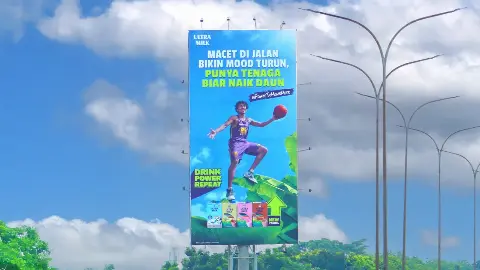
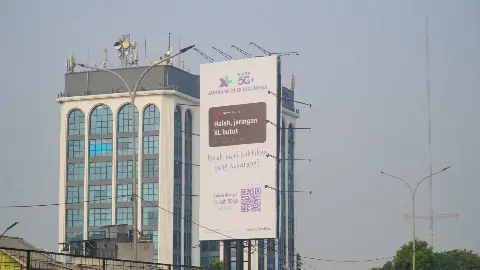
International teams tend to read "8 x 16 m" as a landscape face. At our four 8 x 16 m sites the face is portrait: 8 m wide and 16 m tall. Our field photos of Billboard PGC and Billboard Lebak Bulus show this clearly. A key visual designed as a 16:9 banner for digital channels cannot simply be scaled up; it needs a new vertical layout with product, headline and logo stacked rather than placed side by side.
Billboard Arjuna A and B on Jl. Arjuna Selatan in West Jakarta measure 6 x 12 m. Same ratio, so the 8 x 16 m master scales down without losing elements. Still confirm the orientation of the Arjuna faces when you book. Site data lists dimensions, and a wrong orientation is usually discovered only after the vinyl is printed.
A habit that saves a round of revisions: send a rough layout to the media team before the final design is built. A five-minute ratio check is far cheaper than reprinting 128 square metres of material.
One note on scaling down. When the 8 x 16 m master is reduced to 6 x 12 m, every element shrinks by a quarter. A headline that reads comfortably at Lebak Bulus can become too small at Arjuna, especially second lines and offer terms. Recheck the smallest type size in the 6 x 12 m file and cut copy that will never be legible from the road instead of forcing it in.
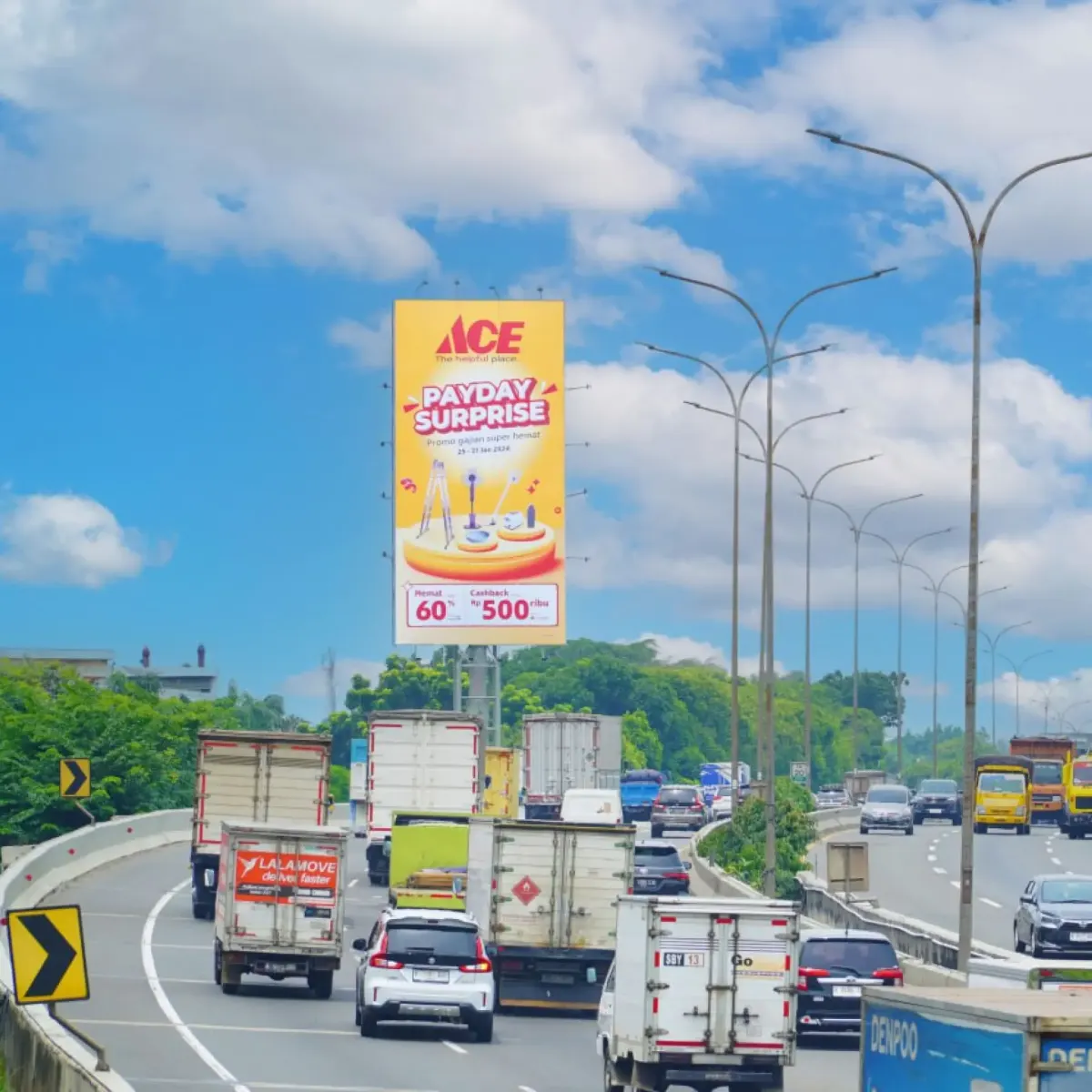
Billboard print file specifications printers usually ask for
Nobody builds an 8 x 16 m face at full size. Most Jakarta printers accept scaled artwork, commonly 1:10 (80 x 160 cm) or 1:20, and enlarge it at the machine. Because a billboard is read from tens of metres away, effective resolution at full size can be far lower than print collateral. The exact figures depend on the printer and the machine, so get the specification in writing before the designer starts, then check the file against this list:
- Site, size and scale in the file name, for example PGC_8x16m_scale1-10, so files for different sites never get swapped.
- CMYK colour mode. Bright greens and oranges that glow on a monitor usually lose some punch on vinyl.
- Product and talent images taken from the original shoot files, not compressed downloads from social media.
- Type converted to outlines, or fonts supplied, so nothing substitutes on the printer's machine.
- Extra material around the face for tying it to the frame. The amount varies by structure, so ask the production team.
- Final format as requested by the printer, usually print-ready PDF or TIFF, plus a small JPG for internal sign-off.
Keep the approval file and the production file separate. Regional or global approvers can sign off a small JPG on their phones, while the heavy file goes straight to production instead of being forwarded through chat apps that compress attachments.
Safe zones on a portrait face
Billboard vinyl is stretched and tied onto the frame. Edges can fold, hide behind the structure or shift slightly as the material is tensioned. Logos, offer figures and URLs belong inside a safe area set back from the edges. Use the measurement our production team gives for each site rather than a template from another market.
Portrait faces also change how drivers read the board. The top third is seen first, because the lower part is often blocked by trees, poles or trucks in front. At Billboard Kota Kasablanka, which faces towards Kuningan, roadside trees frame the face from the driver's point of view. Put the main message and the logo in the upper two thirds and check the layout over a photo of the site taken from the approach direction before you lock it. Copy length and type size are covered in our note on readable billboard design.
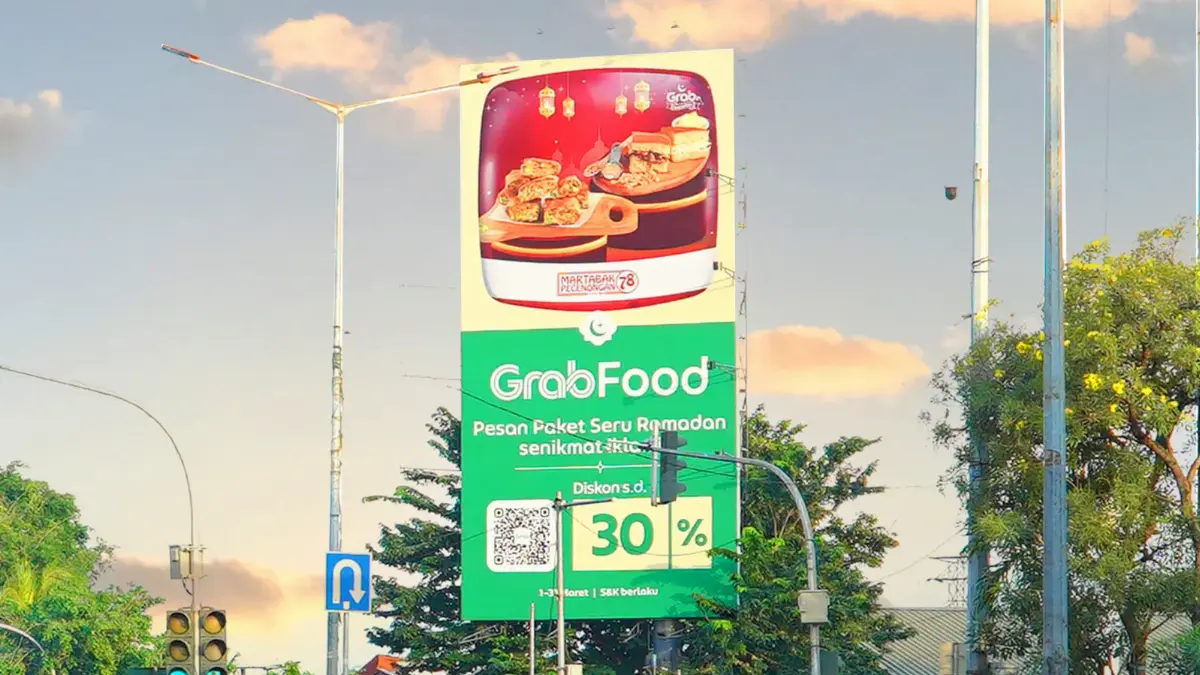
QR codes deserve a separate decision. On free-flowing roads almost nobody scans them. They only make sense where traffic regularly stops at a red light in front of the board, and even then they need to be large. Our field photos of Billboard PGC, for instance, show a traffic light and a queue of motorbikes right in front of the face, which gives riders a few seconds to raise a phone. On an elevated road or toll section that window does not exist. When in doubt, use a short URL or a search term instead.
Colour and material under sun and floodlights
Our static billboards are lit by floodlights mounted on arms fixed to the frame. By day, the artwork is seen under harsh and often hazy tropical sun. At night, those lamps are the only light source. Low contrast suffers most in both conditions: grey type on white, thin type over a busy photo, or a product colour that sits too close to the background. Large white areas tend to glare at night.
The test is simple. Ask for a small printed swatch of the most important area, usually the logo and headline, and look at it outdoors in daylight and after dark. Do not approve colour from a laptop screen in an air-conditioned meeting room.
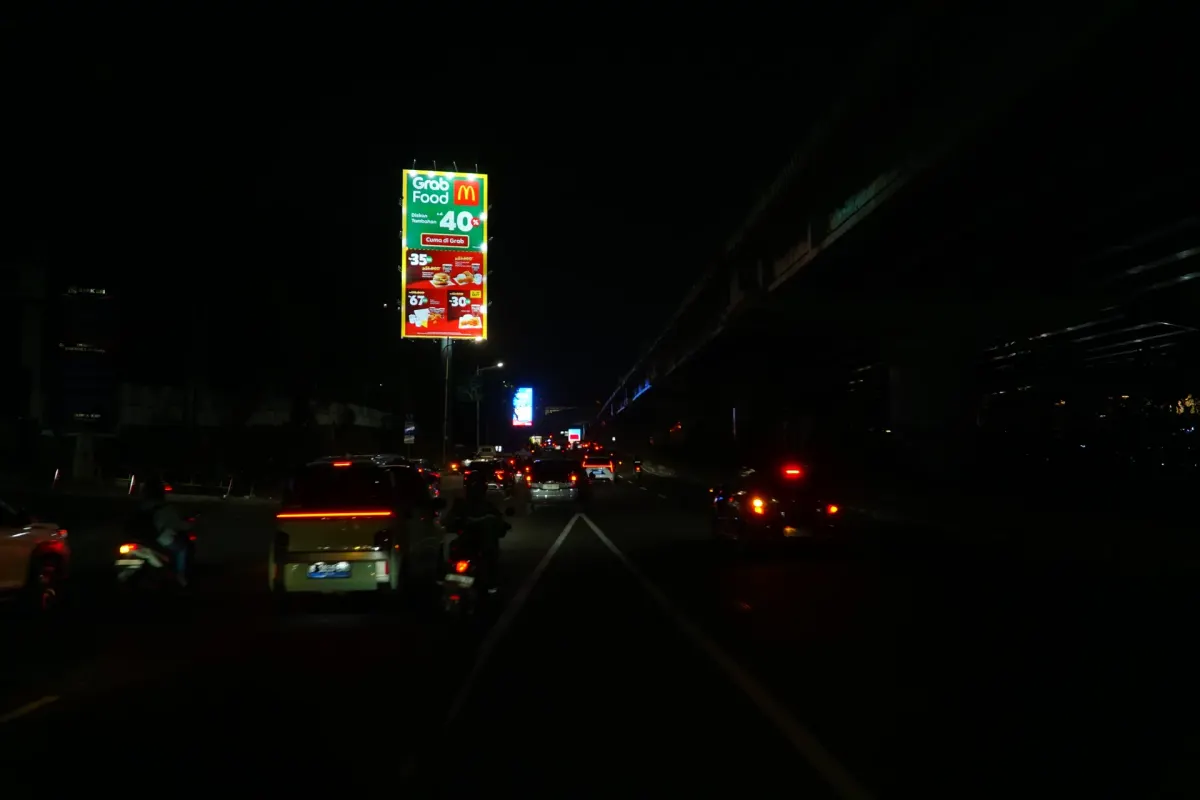
Front-lit faces typically use frontlit flex vinyl, stretched tight on the frame. Jakarta's rainy season, which sets in around November, tests that tension with heavy downpours and strong gusts. If your flight runs for several months through the wet season, agree at the start how the material will be inspected and replaced if it tears or sags, and ask for field photos after severe weather.
Timeline from final artwork to installation
Plan backwards from the go-live date. The sequence is brand approval, file check by production, printing, installation, then photo proof of the installed material. The usual mistake for teams new to Indonesia is treating the contract start date as the date the file can be sent. Installation happens at height and depends on the weather, so heavy rain can push it back. Deliver final files several working days before go-live and confirm the exact lead time with us for the site and season.
For multi-site plans, prepare one file per site even if the design is identical, and consider different headlines by traffic direction. Billboard TB Simatupang faces towards Lebak Bulus, while Billboard PGC on Jl. Dewi Sartika faces Jl. Raya Bogor towards Cililitan. Those two flows carry people heading to different places. GrabFood campaigns, for example, have run on both sites, which share the same 8 x 16 m portrait format.
Mid-flight creative changes can be planned, but each change means a reprint and a reinstall. If your message needs to rotate often, such as weekly promotions, weigh it against a digital face first; we compare the two in static billboard vs digital billboard.
Final check before the file goes out
| Item | Question to ask |
|---|---|
| Ratio and orientation | Is the file a 1:2 portrait that matches the booked site? |
| File name | Are site, size and scale clearly written? |
| Safe zone | Are the logo, offer figures and URL well clear of the edges? |
| Colour | Is the file CMYK, and has a printed swatch been checked outdoors? |
| Sign-off | Is the version sent to production the exact version that was approved? |
Cost factors linked to artwork
A billboard quote depends on the site, face size, contract length, number of sites, production and installation, the number of creative changes during the flight, and the applicable advertising tax and permits. On the artwork side, the costs that most often surprise clients are reprints caused by a wrong ratio or by colour rejected after the vinyl was produced. Site details and sizes are on our billboard advertising page.
Next step: send your key visual, shortlisted sites and go-live date via WhatsApp on +6282288108888 or through our contact page. We will check ratio and orientation for each site, share the file specification it needs, and prepare a quote for your campaign period.